
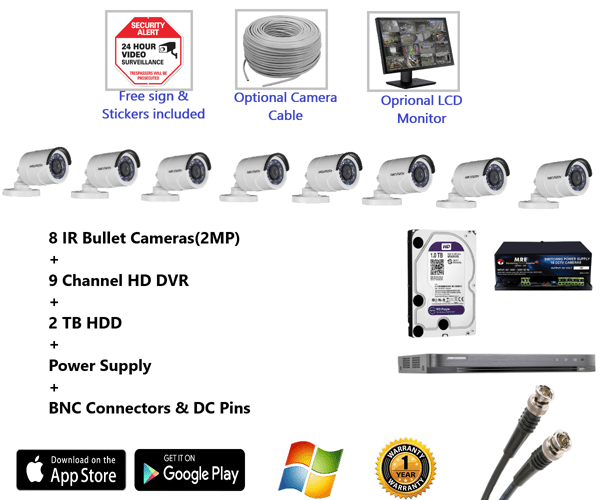
With the increasing concerns about security and safety, CCTV cameras have become an essential tool for monitoring and surveillance in various settings. Closed Circuit Television (CCTV) cameras offer a range of benefits that contribute to enhancing security measures and providing peace of mind.
One of the primary advantages of CCTV cameras is their ability to deter criminal activities. The presence of visible cameras can act as a deterrent to potential intruders or wrongdoers, reducing the likelihood of crimes such as theft, vandalism, or trespassing. In case an incident does occur, CCTV footage serves as valuable evidence that can aid in investigations and help law enforcement authorities identify perpetrators.
CCTV cameras are versatile and can be installed in different locations, both indoors and outdoors. They can be used in residential buildings, commercial establishments, public areas, parking lots, educational institutions, and more. With advancements in technology, modern CCTV systems offer features such as high-definition video quality, night vision capabilities, motion detection sensors, remote viewing options, and cloud storage for footage.
Remote monitoring is another significant benefit of CCTV cameras. Users can access live feeds or recorded footage from their cameras using smartphones, tablets, or computers connected to the internet. This feature allows for real-time monitoring of premises from anywhere at any time, providing added convenience and flexibility.
In addition to security purposes, CCTV cameras also serve other functions such as monitoring traffic flow in urban areas or parking lots, ensuring workplace safety compliance in industrial settings, and enhancing overall operational efficiency in retail stores or offices. The data collected from CCTV footage can be analyzed to improve processes, optimize resource allocation, and enhance decision-making.
Overall, CCTV cameras play a crucial role in maintaining security and surveillance across various environments. Their effectiveness in deterring crime, providing evidence for investigations, enabling remote monitoring capabilities, and supporting operational efficiency makes them an indispensable tool for safeguarding people and property.
Top 8 Benefits of CCTV Cameras: Enhancing Security and Efficiency
- Deter criminal activities with visible presence of CCTV cameras
- Provide valuable evidence for investigations in case of incidents
- Versatile installation options for indoor and outdoor use
- Advanced features like high-definition video quality and night vision capabilities
- Remote monitoring allows real-time access to live feeds from anywhere
- Enhance security in residential, commercial, and public settings
- Support operational efficiency and process optimization with data analysis from footage
- Contribute to overall safety compliance and workplace monitoring
6 Key Drawbacks of CCTV Cameras: Privacy, Cost, and More
- Privacy concerns
- Cost of installation and maintenance
- Limited effectiveness in low-light conditions
- Vulnerability to hacking
- Legal compliance challenges
- False sense of security
Deter criminal activities with visible presence of CCTV cameras
The presence of CCTV cameras acts as a powerful deterrent to criminal activities. When potential wrongdoers see visible cameras in place, they are less likely to engage in unlawful behavior such as theft, vandalism, or trespassing. The awareness that their actions are being monitored and recorded creates a sense of accountability and reduces the risk of crimes occurring on the premises. This proactive measure of using CCTV cameras not only helps prevent incidents from happening but also contributes to creating a safer and more secure environment for individuals and properties.
Provide valuable evidence for investigations in case of incidents
In case of incidents, one significant advantage of CCTV cameras is their ability to provide valuable evidence for investigations. The footage captured by CCTV cameras can offer crucial insights into what transpired during an incident, helping authorities to understand the sequence of events and identify individuals involved. This visual evidence can be instrumental in resolving disputes, determining liability, and supporting legal proceedings. By offering a clear and objective record of activities, CCTV cameras enhance the investigative process and contribute to ensuring accountability and justice.
Versatile installation options for indoor and outdoor use
CCTV cameras offer versatile installation options for both indoor and outdoor use, making them suitable for a wide range of environments and settings. Whether it’s monitoring the interior of a residential property, securing the perimeter of a commercial building, or overseeing public spaces, CCTV cameras can be strategically placed to provide optimal coverage and surveillance. The flexibility in installation allows users to customize their security systems according to specific needs and requirements, ensuring comprehensive monitoring and protection against potential threats or incidents.
Advanced features like high-definition video quality and night vision capabilities
The advanced features of CCTV cameras, such as high-definition video quality and night vision capabilities, significantly enhance their effectiveness in monitoring and surveillance. The high-definition video quality ensures clear and detailed footage, allowing for better identification of individuals and objects captured on camera. Additionally, the night vision capabilities enable the cameras to capture images in low-light or dark conditions, providing continuous surveillance around the clock without compromising on visibility. These advanced features not only improve the overall security measures but also offer peace of mind knowing that the surveillance system can deliver reliable performance in various lighting conditions.
Remote monitoring allows real-time access to live feeds from anywhere
Remote monitoring is a significant advantage of CCTV cameras as it enables users to access live feeds in real-time from any location with an internet connection. This feature provides convenience and flexibility, allowing individuals to keep a watchful eye on their premises or assets even when they are not physically present. Whether monitoring a home, office, or business establishment, the ability to remotely view CCTV footage enhances security measures and provides peace of mind knowing that surveillance can be accessed anytime and anywhere.
Enhance security in residential, commercial, and public settings
CCTV cameras play a vital role in enhancing security in residential, commercial, and public settings. In residential areas, CCTV cameras act as a deterrent to potential intruders and burglars, providing homeowners with peace of mind knowing that their property is being monitored. In commercial settings, CCTV cameras help prevent theft, vandalism, and unauthorized access, safeguarding valuable assets and ensuring the safety of employees and customers. In public spaces such as parks, streets, and transportation hubs, CCTV cameras contribute to crime prevention and public safety by monitoring activities and deterring antisocial behavior. Overall, the presence of CCTV cameras in these settings serves as a proactive security measure that helps create a secure environment for residents, businesses, and the general public.
Support operational efficiency and process optimization with data analysis from footage
CCTV cameras support operational efficiency and process optimization by providing valuable data for analysis from the footage they capture. By reviewing the recorded video, businesses can gain insights into their operations, identify areas for improvement, and make informed decisions to streamline processes. This data-driven approach helps in optimizing resource allocation, enhancing productivity, and ensuring compliance with operational standards. By leveraging the information obtained from CCTV footage analysis, organizations can implement targeted strategies to boost efficiency and achieve better overall performance in their day-to-day activities.
Contribute to overall safety compliance and workplace monitoring
One significant advantage of CCTV cameras is their ability to contribute to overall safety compliance and workplace monitoring. By installing CCTV cameras in work environments, employers can ensure that safety protocols are being followed, and employees are adhering to established guidelines and procedures. The presence of cameras can help deter unsafe behaviors, identify potential hazards or risks, and facilitate prompt responses to emergencies or incidents. Additionally, CCTV footage can be used to review and analyze workplace activities, identify areas for improvement in safety practices, and enhance overall monitoring of operations to create a safer and more secure work environment for everyone involved.
Privacy concerns
Privacy concerns are a significant con associated with CCTV cameras. While these devices are instrumental in enhancing security measures, they also have the potential to intrude on individuals’ privacy rights. The continuous monitoring and recording of activities by CCTV cameras can lead to a sense of constant surveillance, raising questions about the extent to which personal privacy is being compromised. In public spaces or workplaces, where CCTV cameras are commonly installed, there is a risk of capturing sensitive information or private moments without consent. Balancing the need for security with respecting individuals’ right to privacy remains a challenge in the widespread use of CCTV systems.
Cost of installation and maintenance
One significant drawback of CCTV cameras is the cost associated with their installation and maintenance. Setting up a comprehensive CCTV system can be a substantial financial investment, encompassing expenses such as purchasing the necessary equipment, paying for professional installation services, and covering ongoing maintenance and monitoring costs. The initial outlay for high-quality cameras, recording devices, monitors, and other components can be significant, especially for larger or more complex surveillance setups. Additionally, installation fees charged by professionals to ensure proper placement and configuration of the cameras can add to the overall expense. Moreover, regular maintenance tasks such as cleaning, adjusting camera angles, updating software, and replacing faulty components require additional resources and budget allocation. The cumulative costs of installing and maintaining a CCTV system can pose a financial challenge for individuals or organizations looking to enhance their security measures.
Limited effectiveness in low-light conditions
One significant drawback of CCTV cameras is their limited effectiveness in low-light conditions. In environments with poor lighting or during nighttime, some CCTV cameras may struggle to capture clear and detailed footage, which can compromise their surveillance capabilities. This limitation can hinder the camera’s ability to provide accurate identification of individuals or events, potentially impacting the overall security and monitoring effectiveness of the system. To address this con, users may need to invest in additional lighting solutions or consider upgrading to cameras equipped with advanced low-light technology for improved performance in challenging lighting conditions.
Vulnerability to hacking
One significant con of CCTV cameras is their vulnerability to hacking. Like any connected device, CCTV cameras are susceptible to cyber threats and hacking attempts that could compromise the security of the system. Hackers may exploit vulnerabilities in the camera’s software or network connections to gain unauthorized access to live feeds, recorded footage, or even control over the camera itself. This intrusion not only compromises the privacy and security of the monitored space but also poses a risk of data breaches and misuse of sensitive information. It is essential for users to implement robust cybersecurity measures, such as regularly updating firmware, using strong passwords, encrypting data transmissions, and monitoring network activity to mitigate the risk of hacking incidents and safeguard the integrity of their CCTV systems.
Legal compliance challenges
Legal compliance challenges pose a significant con when it comes to the use of CCTV cameras. Adhering to regulations related to data protection laws and consent requirements can be a complex and demanding task for both individuals and organizations. Ensuring that CCTV systems are used in accordance with privacy laws, obtaining necessary permissions from individuals being monitored, and handling sensitive data in a secure manner are crucial aspects that need careful attention to avoid potential legal repercussions.
False sense of security
One significant drawback of relying solely on CCTV cameras for security measures is the false sense of security they may create. While CCTV cameras are valuable tools for capturing footage of incidents, they do not have the capability to prevent crimes or security breaches in real-time. Depending solely on CCTV cameras can lead individuals to believe that their premises are fully secure, when in reality, these cameras serve as reactive rather than proactive measures. In the absence of comprehensive security protocols and systems, simply having CCTV cameras installed may give a false sense of protection, leaving vulnerabilities unaddressed until an incident occurs and footage is reviewed after the fact.