Best Home Outdoor Cameras: A Practical Guide for Indian Homes
A good outdoor camera can help you keep an eye on entrances, driveways, gardens and other vulnerable areas of your property. The best choice is not necessarily the camera with the highest resolution or the most features. It is the one that suits your home, provides dependable footage in local conditions and is easy to use and maintain.
This guide explains what to look for in a home outdoor camera and how to choose the right type for your needs.
What makes an outdoor camera a good choice?
Outdoor cameras need to do more than record video. They should be built to withstand changing weather, capture useful footage at night and remain reliable over time. Before buying, consider these essential features:
- Weather resistance: Check the camera’s IP rating. An IP66-rated camera is dust-tight and designed to withstand powerful water jets, making it a common option for outdoor use. Follow the manufacturer’s installation guidance, particularly in areas exposed to heavy rain.
- Image quality: Choose a resolution that can show useful details for the area being monitored. Higher resolution can help identify people or objects, but image quality also depends on the lens, lighting and camera placement.
- Night vision: Infrared night vision can record in low light, while colour night vision may provide more detail when there is enough ambient light or a built-in light.
- Motion detection: Detection zones and adjustable sensitivity can reduce unnecessary alerts from passing traffic, trees or animals. Some cameras can distinguish between people, vehicles and other movement.
- Storage options: Footage may be stored on a memory card, a network video recorder (NVR) or a cloud service. Check storage capacity, subscription costs and how long recordings are retained.
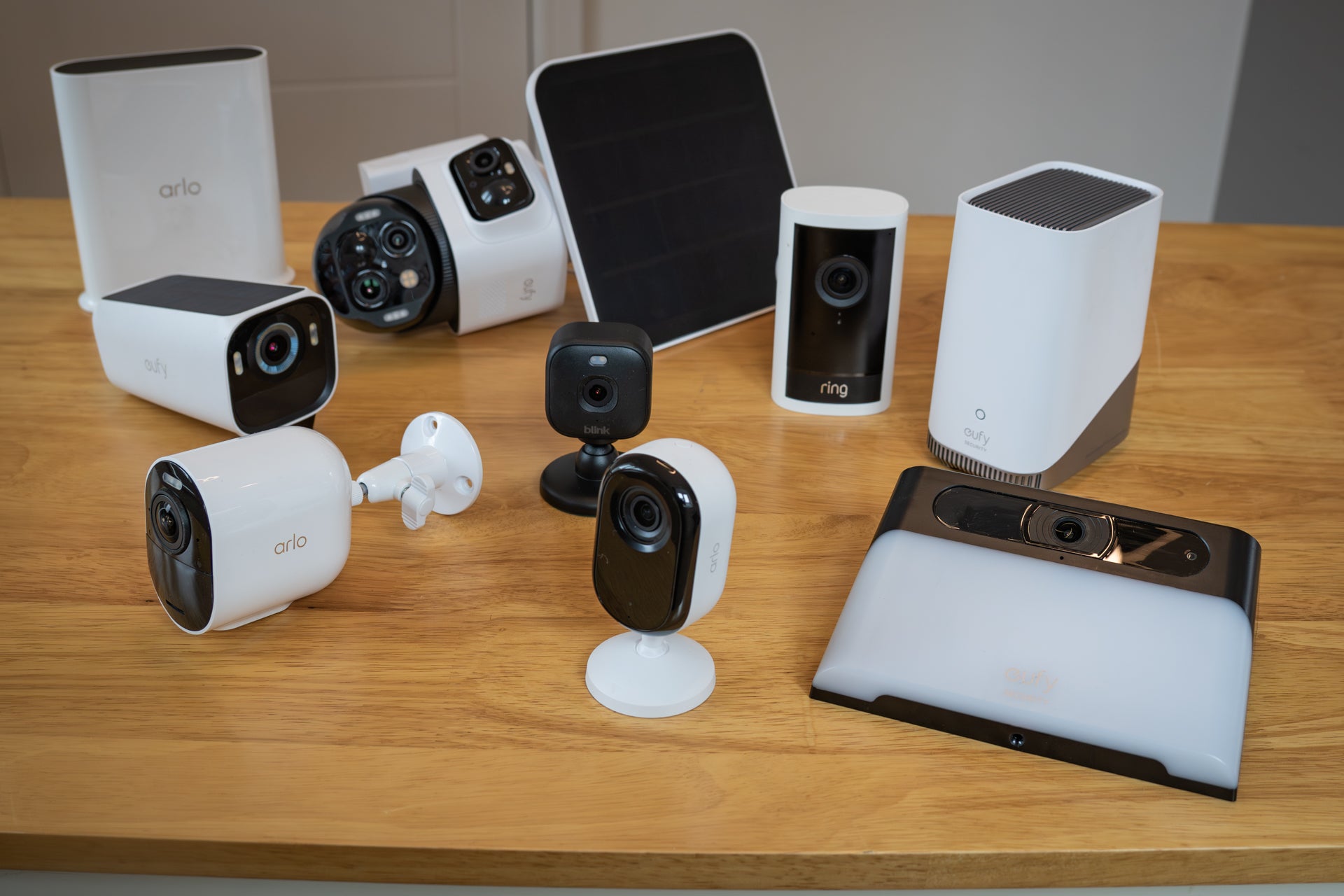
- Reliable connectivity: Wi-Fi cameras are convenient, but their performance depends on signal strength. A wired camera, including a Power over Ethernet (PoE) model, can offer a more stable connection where cabling is practical.
- App and alerts: Look for an easy-to-use app with live viewing, playback, clear notifications and secure account settings.
Types of outdoor cameras for homes
Wired CCTV cameras
Wired cameras connect to a recorder or network using cables. They are a strong option for homeowners who want a permanent system with continuous recording and reliable connectivity. Installation takes more planning, but a well-designed wired system can cover several areas around the home.
Wi-Fi cameras
Wi-Fi cameras are generally easier to install and may suit flats, rented homes or locations where running cables is difficult. Before choosing one, check that the Wi-Fi signal reaches the intended mounting point. Also consider how the camera will be powered and whether it records continuously or only when motion is detected.
PoE cameras
PoE cameras use a single Ethernet cable for both network connectivity and power. They are useful when a stable connection is important and can be a convenient choice for a new CCTV installation. A compatible PoE switch or NVR is usually required.
Battery-powered cameras
Battery models can be installed without nearby power points, but they need periodic charging or battery replacement. Their recording settings and battery life may vary with activity levels, weather and signal strength.
Choosing a camera for your property
The best camera setup depends on what you want to monitor:
- Main entrance: Choose a camera with a clear view of visitors approaching the door, suitable night vision and useful motion alerts.
- Driveway or parking area: Consider a wider field of view and enough detail to monitor vehicles. A separate camera may be needed to capture the entrance and the full parking area clearly.
- Garden or side passage: Look for weather resistance, dependable night vision and detection settings that can be adjusted to minimise false alerts.
- Larger homes or multiple entrances: A multi-camera CCTV system with an NVR may be more suitable than relying on several independent Wi-Fi cameras.
Features worth considering
Some features add convenience, but they should be chosen according to your requirements rather than treated as must-haves.
- Two-way audio: Lets you speak to a visitor through the camera’s app, where supported.
- Pan, tilt and zoom: Allows some cameras to cover a wider area, though fixed cameras can provide a dependable view of a specific entrance or pathway.
- Built-in spotlight or siren: May help illuminate an area or draw attention to activity. Check that these features can be configured to suit your household and neighbours.
- Local recording: Can reduce dependence on a subscription, but recordings should be protected against theft or damage to the camera.
- Backup power: A suitable backup arrangement can help keep a system operating during power interruptions.
Installation tips for better footage
Even a capable camera may produce poor footage if it is installed in the wrong position. Mount cameras securely, out of easy reach, and angle them to avoid direct sunlight, strong reflections and obstructions. Test the view during both daytime and night-time conditions before finalising the installation.
For reliable coverage, identify the areas that matter most and plan camera positions before buying equipment. Avoid pointing cameras into neighbours’ homes or private spaces. Use strong, unique passwords, enable available security features and keep camera software up to date.
Should you choose a single camera or a CCTV system?
A single Wi-Fi or battery-powered camera may be enough for monitoring one entrance. If you need continuous recording, several viewing angles or coverage of a larger property, a wired or PoE system with an NVR may be a better fit. When comparing options, consider the total cost, including installation, storage, cabling, accessories and any ongoing subscription fees.
Final thoughts
The best home outdoor camera is one that matches the area you need to monitor, works reliably in your local conditions and stores footage in a way that suits you. Compare weather resistance, night-time performance, connectivity, storage and after-sales support before making a decision. For a larger or more complex property, professional advice can help ensure the cameras provide practical coverage without blind spots.
8 Key Benefits of the Best Outdoor Home Security Cameras
- Deter unwanted visitors.
- Monitor entrances and driveways.
- View live footage remotely.
- Record activity around the home.
- Capture clear footage at night.
- Receive motion alerts on your phone.
- Choose wired or wireless options.
- Improve peace of mind while away.
Outdoor Home Cameras: Installation Costs, Wi-Fi Issues and Subscription Fees
- Installation and wiring can add to the cost.
- Wi-Fi models may struggle with weak signals.
- Cloud storage may require a recurring subscription.
Deter unwanted visitors.
Outdoor cameras can help deter unwanted visitors by making it clear that the property is being monitored. A visible camera near an entrance, driveway or boundary may discourage trespassing and suspicious activity. If an incident does occur, recorded footage can also provide useful information for reviewing what happened. For best results, position cameras prominently while respecting neighbours’ privacy.
Monitor entrances and driveways.
Outdoor cameras help you monitor entrances and driveways, giving you a clear view of visitors, deliveries and vehicles approaching your home. With motion alerts and night vision, you can check activity even when you are away or after dark. Position the camera to cover key access points while respecting your neighbours’ privacy.
View live footage remotely.
One of the biggest advantages of a home outdoor camera is the ability to view live footage remotely. Using a mobile app or web browser, you can check your entrance, driveway or garden while you are at work, travelling or away from home. This helps you stay informed about activity on your property and, where supported, respond to visitors using two-way audio. A reliable internet connection and secure account settings are important for smooth, private access.
Record activity around the home.
One of the key advantages of outdoor cameras is that they record activity around your home, including movement near entrances, driveways, gardens and boundary walls. Depending on the camera and its settings, footage may be recorded continuously or when motion is detected, giving you a useful record to review if an incident occurs. Remote viewing and motion alerts can also help you check activity when you are away, offering greater awareness and peace of mind.
Capture clear footage at night.
One of the key advantages of the best home outdoor cameras is their ability to capture clear footage at night. Infrared night vision can record activity in low-light conditions, while cameras with colour night vision may show more detail when there is some ambient light. This helps homeowners monitor entrances, driveways and outdoor spaces after dark, providing useful footage when it is needed most.
Receive motion alerts on your phone.
One of the key advantages of a home outdoor camera is receiving motion alerts on your phone. When the camera detects activity around your entrance, driveway or garden, it can send a notification through its app, helping you check what is happening even when you are away from home. Adjustable detection zones and sensitivity settings can help reduce alerts caused by passing traffic, pets or moving branches.
Choose wired or wireless options.
One of the key advantages of the best home outdoor cameras is the choice between wired and wireless options. Wired cameras can provide a stable connection and continuous power, making them suitable for permanent installations and larger CCTV systems. Wireless cameras are generally easier to install and offer greater flexibility when positioning them around your home, especially where running cables is difficult. Choosing the right option depends on your property layout, Wi-Fi coverage, power access and recording needs.
Improve peace of mind while away.
Outdoor cameras can help you feel more at ease when you are away from home. With live viewing and motion alerts on a mobile app, you can check activity around entrances, driveways or gardens and respond promptly to unexpected movement. Recorded footage can also help you review events later. For better peace of mind, choose a camera with dependable connectivity, secure account settings and alerts that are tailored to your needs.
Installation and wiring can add to the cost.
One drawback of home outdoor cameras is that installation and wiring can increase the overall cost. Wired systems may require cabling, drilling and professional installation, particularly when cameras need to be fitted in hard-to-reach areas or connected to a recorder. Even wireless models may need suitable power points, mounting equipment or extra accessories. It is worth including these expenses in your budget when comparing camera options.
Wi-Fi models may struggle with weak signals.
Wi-Fi outdoor cameras may struggle to maintain a reliable connection when installed far from the router or behind thick walls and other obstructions. A weak signal can cause delayed alerts, interrupted live viewing or gaps in recordings. Before installation, check Wi-Fi coverage at the camera’s intended location; a mesh system, Wi-Fi extender or wired connection may help improve reliability.
Cloud storage may require a recurring subscription.
Cloud storage can make it easy to access recordings remotely, but it may come with a recurring subscription fee. Over time, these charges can add to the cost of your outdoor camera, especially if you use multiple cameras or need longer video-history retention. Check the plan’s fees, storage limits and renewal terms before buying, and consider a camera with local storage if you would prefer to avoid ongoing charges.