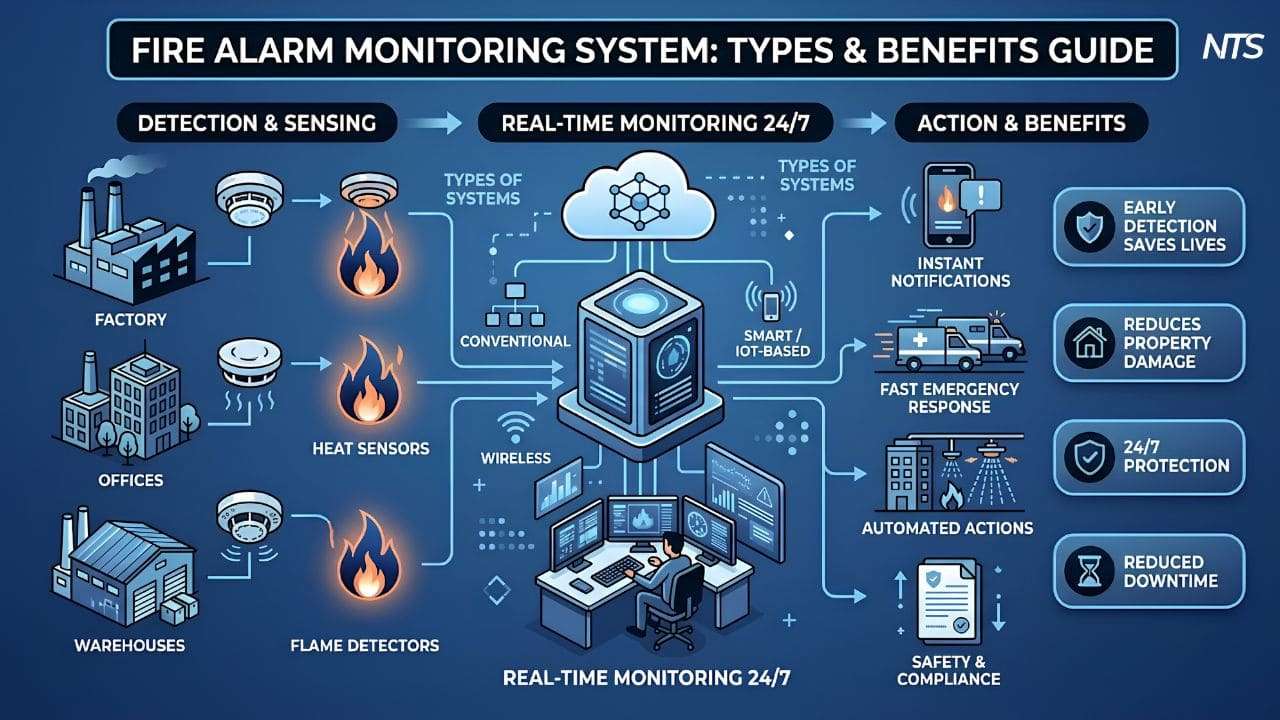
How an Automatic Fire Monitoring System Detects Fire
An automatic fire monitoring system detects fire by identifying changes in the surrounding environment that may indicate a fire. Depending on the system design, it can monitor smoke, heat, flames or gases, then send an alert to a fire alarm control panel and, where connected, a monitoring centre.
What does the system monitor?
Automatic fire monitoring systems use one or more types of detectors. The right combination depends on the building, the activities taking place there and the potential fire risks.
- Smoke detectors: Detect smoke particles in the air. Some use optical sensors, while others use different sensing methods to identify smoke.
- Heat detectors: Respond when the temperature rises above a set level or increases rapidly.
- Flame detectors: Identify the light or radiation produced by a flame. These may be suitable for locations where a fire could develop quickly.
- Gas detectors: In systems designed for specific risks, sensors can monitor for certain gases associated with fire or combustion.
How fire detection works
Each detector continually checks the conditions around it. When its readings meet the system’s configured alarm criteria, it sends a signal to the fire alarm control panel. The panel processes the signal and activates the appropriate response, which may include sounding alarms, flashing warning lights or notifying designated personnel.
In a monitored installation, the system can also transmit an alert to a monitoring centre or authorised contacts. Depending on the configuration, it may operate other connected safety equipment, such as releasing fire doors or controlling ventilation. Such functions should be designed and installed in accordance with applicable fire safety requirements.
Reducing false alarms
Smoke, dust, steam, cooking fumes or equipment faults can sometimes trigger a detector. To help reduce unwanted alarms, detectors should be selected and positioned for the specific environment. Some systems use multiple detectors or programmed verification procedures before initiating certain actions. These settings must not compromise the speed or reliability of fire warnings.
Why regular maintenance matters
A fire monitoring system can only provide dependable protection when it is correctly designed, installed and maintained. Detectors may become dirty or damaged, batteries may need replacement, and communication links can fail. Regular inspection and testing help confirm that detectors, control panels, alarms and monitoring connections are working as intended.
Conclusion
An automatic fire monitoring system detects fire by sensing signs such as smoke, rising temperature, flame radiation or specific gases. It then sends the information to a control panel, which activates alarms and other configured responses. Choosing suitable detectors and arranging regular testing are essential steps in keeping a building’s fire protection system reliable.
Top 5 Benefits of an Automatic Fire Monitoring System
- Detects smoke, heat or flames early.
- Provides timely alerts to occupants.
- Can notify a monitoring centre automatically.
- Supports faster emergency response.
- Helps protect people and property.
Six Limitations of Automatic Fire Monitoring Systems
- Smoke, dust or steam may cause false alarms.
- Poor detector placement can leave blind spots.
- Sensors need regular testing and maintenance.
- Power or network failures may interrupt alerts.
- Some fires may not trigger every detector type quickly.
- The system detects fire but does not prevent it.
Detects smoke, heat or flames early.
An automatic fire monitoring system can detect smoke, rising heat or flames at an early stage, helping alert occupants and responsible personnel before a fire spreads. This early warning gives people more time to evacuate and enables a prompt response, potentially reducing the risk of injury and damage to property.
Provides timely alerts to occupants.
One of the key advantages of an automatic fire monitoring system is that it provides timely alerts to occupants. When sensors detect signs of fire, such as smoke or a rapid rise in temperature, the system can activate audible alarms and visual alerts throughout the building. Early warnings give people more time to follow evacuation procedures and move to a safe location. This is especially valuable in larger premises, where a fire may not be immediately visible or audible to everyone.
Can notify a monitoring centre automatically.
An important advantage of an automatic fire monitoring system is its ability to notify a monitoring centre when it detects signs of fire, such as smoke or a rapid rise in temperature. This alert can be sent even when the premises are unoccupied, helping ensure that the incident is noticed promptly and the appropriate response can be arranged. As a result, automatic monitoring can support faster action and help reduce risks to people and property.
Supports faster emergency response.
An automatic fire monitoring system supports a faster emergency response by detecting signs of fire, such as smoke or a sudden rise in temperature, and raising an alert promptly. The warning can notify people in the building and, if the system is connected to a monitoring centre, alert designated responders. Early notification gives occupants more time to evacuate and helps emergency teams begin their response sooner.
Helps protect people and property.
An automatic fire monitoring system helps protect people and property by detecting signs of fire, such as smoke or rising heat, and raising an alert promptly. Early warnings give occupants more time to evacuate and allow staff or emergency services to respond sooner, potentially limiting injuries and damage to buildings, equipment and belongings.
Smoke, dust or steam may cause false alarms.
One limitation of an automatic fire monitoring system is that smoke, dust or steam may trigger a false alarm. Activities such as cooking, cleaning, construction or using industrial equipment can create particles or vapour that resemble signs of a fire to certain detectors. False alarms may cause unnecessary disruption and reduce confidence in the system over time. Choosing detectors suited to the environment, positioning them correctly and arranging regular maintenance can help minimise this risk without compromising fire safety.
Poor detector placement can leave blind spots.
A key limitation of an automatic fire monitoring system is that poor detector placement can leave blind spots. If detectors are blocked, positioned too far from likely fire hazards or installed where airflow carries smoke away, a fire may not be detected promptly. Careful placement by a qualified professional, followed by regular inspection and testing, helps ensure that detectors provide effective coverage throughout the premises.
Sensors need regular testing and maintenance.
One limitation of an automatic fire monitoring system is that its sensors need regular testing and maintenance to work reliably. Dust, dirt, ageing components or damage can affect their performance, potentially causing missed warnings or false alarms. Routine inspections, testing and timely replacement of faulty sensors help ensure the system can detect signs of fire and alert people as intended.
Power or network failures may interrupt alerts.
A key limitation of an automatic fire monitoring system is that power or network failures may interrupt alerts. If the system loses its main power supply or its communication connection, warnings may not reach a monitoring centre or authorised personnel promptly. Backup batteries and alternative communication links can help reduce this risk, but they should be checked and maintained regularly to ensure the system remains dependable during an emergency.
Some fires may not trigger every detector type quickly.
One limitation of an automatic fire monitoring system is that some fires may not trigger every detector type quickly. For instance, a smouldering fire may produce smoke before enough heat is generated to activate a heat detector, while a clean-burning flame may produce little visible smoke for a smoke detector to sense promptly. Detection speed depends on the type and location of the detector, the fire’s behaviour and the airflow in the area. Using a suitable combination of detectors and ensuring they are correctly positioned and regularly tested can help reduce this risk.
The system detects fire but does not prevent it.
One limitation of an automatic fire monitoring system is that it detects a fire but does not prevent one from starting. It can alert occupants, security personnel or a monitoring centre when signs of fire are detected, helping them respond sooner. However, it cannot replace fire prevention measures such as safe electrical practices, proper storage of flammable materials, regular equipment maintenance and suitable fire-safety training. For effective protection, detection systems should be used alongside preventive measures and appropriate firefighting equipment.