Honeywell Fire Alarm Systems: A Guide to Reliable Fire Detection
Early fire detection can help protect people, property and business operations. Honeywell fire alarm systems are designed to detect signs of fire, alert occupants and support a coordinated emergency response. Depending on the site and system design, a solution may include control panels, detectors, manual call points, sounders, visual alarms and monitoring interfaces.
How a fire alarm system works
Fire alarm devices monitor an area for signs such as smoke, heat or flame. When a device detects a potential fire—or someone activates a manual call point—it sends a signal to the fire alarm control panel. The panel processes the signal and activates the appropriate alarms and outputs configured for the building.
Some systems can also share signals with other building services, such as lift controls, ventilation systems or access-control equipment. These connections must be planned and commissioned carefully so that they operate as intended during an emergency.
Common types of Honeywell fire alarm systems
Conventional systems
In a conventional system, devices are arranged in zones. When an alarm is raised, the panel identifies the zone where the signal originated. This approach may suit smaller or simpler premises, depending on the layout and applicable requirements.
Addressable systems
An addressable system identifies individual devices or points on the system, helping staff and responders locate an alarm or fault more precisely. Addressable solutions are often considered for larger or more complex buildings where detailed event information is useful.
The right system depends on factors such as building size, occupancy, fire risk, expansion plans and the applicable codes and standards. Product availability and system options can vary, so specifications should be confirmed with an authorised supplier or qualified fire-safety professional.
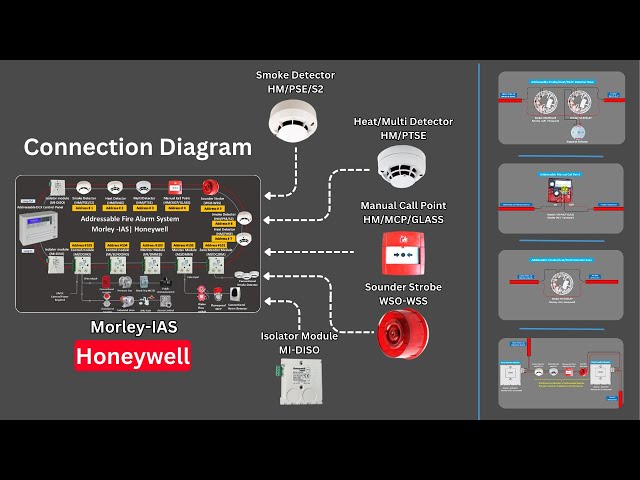
Typical system components
- Fire alarm control panel: Receives and displays signals from connected devices.
- Smoke and heat detectors: Detect specific indicators of a possible fire.
- Manual call points: Allow a person to raise the alarm manually.
- Sounders and visual alarms: Alert occupants, including where audible alerts may not be sufficient.
- Input and output modules: Support approved monitoring and control functions.
- Power supply and standby batteries: Help maintain system operation during a mains power interruption, subject to system design and maintenance.
Benefits of a well-designed system
- Earlier warning: Detection devices can identify fire indicators and initiate an alarm.
- Clearer event location: Addressable systems can help identify the specific device reporting an event.
- Scalable design: The system can be planned around a building’s present needs and potential future changes.
- Coordinated response: Properly configured interfaces can support agreed emergency procedures.
- Improved visibility: A control panel can provide information about alarms, faults and system status.
Choosing a Honeywell fire alarm solution
Before selecting equipment, assess the building’s use, floor plan, occupancy, environmental conditions and fire hazards. Consider the alarm coverage required, the location of control equipment, cable routes, standby power and any approved interfaces with other systems. The design should also allow for testing, maintenance and future modifications.
Fire alarm equipment should be selected and installed by competent professionals. In India, the design and installation should be checked against the applicable local fire-safety requirements, building regulations and relevant standards. Confirm that the proposed equipment is suitable for the application and that the supplier can provide commissioning, documentation and ongoing service support.
Installation, testing and maintenance
A fire alarm system is effective only when it is correctly designed, installed, commissioned and maintained. Following handover, the building owner or responsible person should arrange periodic inspection and testing in line with the system manufacturer’s instructions and applicable requirements. Records of tests, faults, repairs and changes should be kept up to date.
Staff should also know how to respond to alarm signals and whom to contact if a fault appears on the panel. Any changes to the building—including renovations, new partitions or changes in use—should prompt a review of detector coverage and system configuration.
Conclusion
Honeywell fire alarm solutions can form an important part of a building’s fire-safety plan. The most suitable configuration depends on the site, its risks and the applicable requirements. A qualified professional can help assess the premises, recommend compatible equipment and ensure the system is commissioned and maintained appropriately.
Honeywell Fire Alarm Systems in India: 8 Frequently Asked Questions
- What is a Honeywell fire alarm system and how does it work?
- What is the difference between conventional and addressable Honeywell fire alarm systems?
- Which Honeywell fire alarm system is suitable for my building?
- What devices can be connected to a Honeywell fire alarm control panel?
- How much does a Honeywell fire alarm system cost in India?
- How often should a Honeywell fire alarm system be inspected and tested?
- Can a Honeywell fire alarm system be integrated with other building safety systems?
- Where can I buy, install or service a Honeywell fire alarm system in India?
What is a Honeywell fire alarm system and how does it work?
A Honeywell fire alarm system is a fire-safety solution that uses devices such as smoke or heat detectors and manual call points to identify possible signs of fire. When a device is activated, it sends a signal to the control panel, which indicates the alarm or fault location and triggers connected sounders, visual alarms or other configured outputs to alert occupants. The system should be designed, installed and maintained by qualified professionals in accordance with applicable fire-safety requirements.
What is the difference between conventional and addressable Honeywell fire alarm systems?
Conventional Honeywell fire alarm systems group detectors and call points into zones, so the control panel indicates which zone has triggered an alarm or fault, but not necessarily the exact device. Addressable systems assign an individual address to each device, allowing the panel to identify the specific detector or call point involved. Conventional systems may suit smaller, simpler premises, while addressable systems can offer more precise information for larger or more complex buildings. The right option depends on the building’s layout, fire-safety requirements and system design.
Which Honeywell fire alarm system is suitable for my building?
The right Honeywell fire alarm system depends on your building’s size, layout, occupancy, fire risks and applicable local requirements. A conventional system may suit a smaller or simpler premises, while an addressable system can help identify the specific device reporting an alarm or fault in a larger or more complex building. Consult a qualified fire-safety professional to assess your site and recommend a compliant system, including suitable detectors, alarms and control equipment.
What devices can be connected to a Honeywell fire alarm control panel?
The devices that can be connected to a Honeywell fire alarm control panel depend on the panel model and whether it is conventional or addressable. Typical compatible devices may include smoke and heat detectors, manual call points, sounders, visual alarm devices such as strobes, input/output modules and remote annunciators. Some systems can also interface with approved building services, such as ventilation or lift controls. Always check the panel’s compatibility documentation and have devices selected, installed and commissioned by a qualified fire-alarm professional.
How much does a Honeywell fire alarm system cost in India?
The cost of a Honeywell fire alarm system in India depends on the type of system (conventional or addressable), the number and type of detectors, the control panel capacity, site size, cabling, installation and commissioning requirements. Additional costs may apply for integration with other building systems and ongoing maintenance. As prices vary by project and supplier, request a site assessment and itemised quotation from an authorised Honeywell partner or qualified fire-safety professional.
How often should a Honeywell fire alarm system be inspected and tested?
A Honeywell fire alarm system should be checked regularly for panel faults, power supply issues and visible damage, with functional testing and professional servicing carried out at the intervals specified by the system manual and applicable local fire-safety requirements. As a general guide, arrange a competent technician’s thorough inspection at least once a year, and more often if required by the site’s risk assessment or regulations. Keep a record of checks, tests and repairs.
Can a Honeywell fire alarm system be integrated with other building safety systems?
Yes, a Honeywell fire alarm system can often be integrated with other building safety and management systems, depending on the models, compatible interfaces and project design. Integration may support functions such as lift recall, ventilation control, access-control release or central monitoring during an alarm. These connections must be designed, installed and tested by qualified professionals to meet applicable Indian fire-safety requirements and ensure each system responds correctly in an emergency.
Where can I buy, install or service a Honeywell fire alarm system in India?
You can buy, install or service a Honeywell fire alarm system in India through an authorised Honeywell channel partner or a qualified fire-safety systems provider. Choose a provider experienced in your type of premises and ask them to assess the site, recommend a suitable system, and confirm product compatibility, installation, commissioning and ongoing maintenance support. Before proceeding, verify the provider’s credentials and ensure the work complies with applicable local fire-safety requirements and relevant standards.