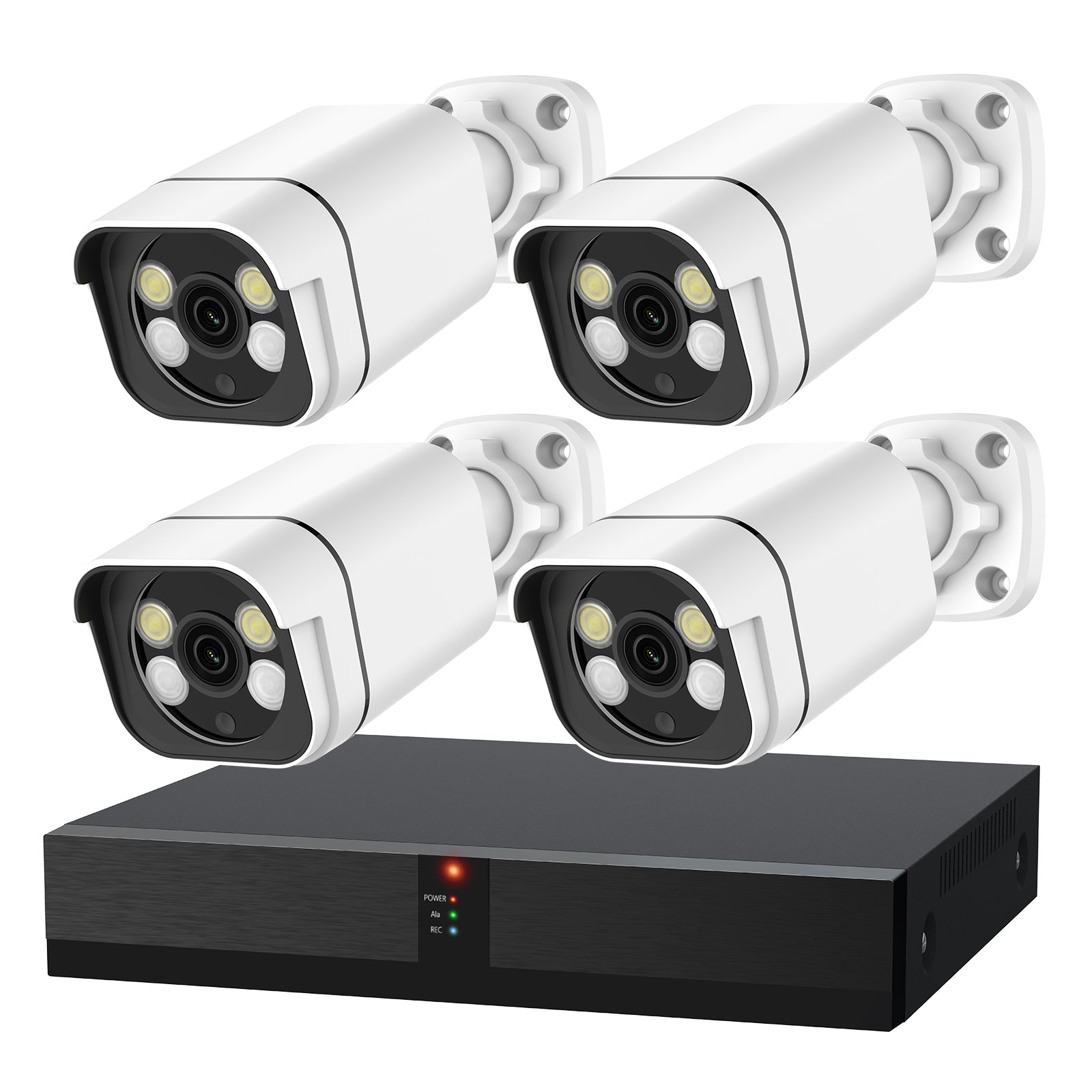
PoE CCTV: A Practical Guide to Power over Ethernet Surveillance
PoE CCTV is a surveillance setup in which network cables carry both data and electrical power to compatible cameras. PoE stands for Power over Ethernet. Instead of connecting each camera to a separate power point, an installer can use an Ethernet cable to connect it to a PoE switch or network video recorder (NVR).
This approach can make CCTV systems easier to install and manage in homes, offices, shops, warehouses and other premises. Here’s how PoE CCTV works and what to consider when choosing a system.
How does PoE CCTV work?
A PoE camera captures video and sends it over an Ethernet network. The same cable can also supply the power it needs. Power is provided by a compatible device called a Power Sourcing Equipment (PSE), usually a PoE switch or PoE-enabled NVR.
The basic setup typically includes:
- PoE cameras: Cameras that support Power over Ethernet.
- Ethernet cables: These carry power and network data between the cameras and the system.
- PoE switch or PoE NVR: Supplies power to the cameras and connects them to the network.
- NVR and storage: Records and stores video footage. Some PoE NVRs have built-in PoE ports.
- Monitor, computer or mobile device: Used to view live footage and recordings.
Benefits of a PoE CCTV system
Simpler cabling
A single Ethernet cable can carry both data and power to a compatible camera. This reduces the need to run a separate power cable to every camera and can make installation neater.
Flexible camera placement
PoE cameras can be installed in locations where a power socket may not be convenient, provided a suitable Ethernet cable can be run there. This can be useful for corridors, entrances, parking areas and warehouse spaces.
Centralised power management
With a PoE switch or NVR, the camera connections can be managed from one location. If the system is connected to a suitable uninterruptible power supply (UPS), it may continue operating during a short power interruption, subject to the UPS capacity and system configuration.
Easy system expansion
Adding cameras can be straightforward when the recorder or switch has spare ports and enough network capacity and PoE power budget. Before expanding a system, check that the existing equipment can support the additional cameras.
Network-based viewing
Footage can often be viewed on a local monitor or through approved software and mobile applications. Remote access depends on the equipment, network settings and security configuration.
PoE CCTV and traditional CCTV: what’s the difference?
Traditional analogue CCTV systems commonly use coaxial cable for video and a separate cable for camera power. PoE CCTV uses network cameras and Ethernet cabling, with power and video data travelling over the same cable.
PoE systems can offer convenient cabling and network features, while the right choice depends on the premises, existing infrastructure, camera requirements and budget. In some cases, an existing analogue system may be more economical to maintain or upgrade.
What to check before choosing PoE CCTV
- Camera resolution and image quality: Select a resolution suited to the area and the level of detail required.
- Night-time performance: Consider infrared or other low-light features, especially for entrances and outdoor spaces.
- Weather protection: For outdoor installation, check the camera’s suitability for the expected weather and location.
- PoE compatibility: Confirm that cameras, switches and NVR ports support compatible PoE standards and power requirements.
- Power budget: Check the total power available from the PoE switch or recorder, particularly when using cameras with heaters, PTZ movement or other power-intensive features.
- Cable distance: Standard Ethernet cabling has distance limitations. Longer runs may require appropriate network equipment or a different design.
- Storage capacity: Recording duration depends on factors such as the number of cameras, resolution, frame rate, compression, motion activity and hard-drive capacity.
- Network security: Use strong passwords, keep firmware updated and restrict access to authorised users. Remote viewing should be configured securely.
- Future expansion: Allow for extra ports, storage and network capacity if more cameras may be added later.
Is PoE CCTV suitable for your premises?
PoE CCTV can be a suitable option when you want a network-based system with streamlined cabling and centralised connections. It is used in a range of settings, from small businesses to larger commercial premises. The best configuration depends on the site layout, surveillance objectives, lighting conditions, network infrastructure and recording requirements.
Before installation, plan camera positions carefully. Cover key areas such as entrances, reception points and loading bays while avoiding unnecessary views into private spaces. Also consider who will be permitted to access recordings and how long footage needs to be retained.
Conclusion
PoE CCTV combines camera power and network connectivity over Ethernet, helping create a tidy and manageable surveillance installation. To get reliable results, choose compatible equipment, plan cable routes and storage requirements, and secure the system properly. A site assessment by a qualified CCTV professional can help determine whether PoE is the right solution for your property.
PoE CCTV FAQs: 7 Common Questions About Cameras, IP Technology and NVRs
- What is PoE in CCTV?
- Is PoE the same as IP?
- What is the difference between CCTV and PoE camera?
- Is PoE CCTV the best?
- Are PoE cameras better?
- What is a PoE NVR?
- What is PoE vs NVR?
What is PoE in CCTV?
PoE in CCTV stands for Power over Ethernet. It allows a compatible security camera to receive electrical power and send video data through a single Ethernet cable connected to a PoE switch or NVR. This can reduce the need for separate power cables and make installation simpler, provided all equipment is compatible and the cable run is within supported limits.
Is PoE the same as IP?
No, PoE and IP are not the same. IP refers to the network technology used by a camera to send video and other data, while PoE (Power over Ethernet) describes how compatible devices receive electrical power through an Ethernet cable. Many IP CCTV cameras support PoE, allowing one cable to carry both power and video data, but not all IP cameras are PoE-enabled. Check that the camera and the PoE switch or NVR are compatible before installation.
What is the difference between CCTV and PoE camera?
CCTV refers to a closed-circuit television surveillance system as a whole, including cameras, cabling, recording equipment and monitors. A PoE camera is a type of network camera that receives power and sends video data through a single Ethernet cable connected to a PoE switch or recorder. In short, CCTV describes the surveillance setup, while PoE describes how a compatible camera gets power and connects to the network.
Is PoE CCTV the best?
PoE CCTV can be an excellent choice for many homes and businesses because a single Ethernet cable can carry both power and video data, making installation neater and system management simpler. However, it is not always the best option for every site. The right choice depends on factors such as existing cabling, camera locations, network capacity, budget and recording requirements. A site assessment can help determine whether PoE CCTV suits your needs.
Are PoE cameras better?
PoE cameras can be a better choice when you want simpler cabling and centralised power, as a single Ethernet cable can carry both power and video data. They are often convenient to install and expand, but they still depend on compatible equipment, suitable network cabling and an adequate PoE power supply. The best option depends on your property, existing setup and surveillance requirements; compare image quality, night vision, storage and system costs before deciding.
What is a PoE NVR?
A PoE NVR (Power over Ethernet Network Video Recorder) is a recorder with built-in PoE ports that connect compatible IP cameras and supply them with power through Ethernet cables. It receives and records the cameras’ video footage, often allowing each camera to connect directly to the NVR without a separate power supply or PoE switch. Check the NVR’s port count and total PoE power capacity to ensure they meet your system’s requirements, as not all NVRs support PoE.
What is PoE vs NVR?
PoE (Power over Ethernet) is a technology that lets a single Ethernet cable carry both power and video data to a compatible CCTV camera. An NVR (Network Video Recorder) is the device that receives, records and stores video from network cameras. They serve different purposes but can work together: a PoE NVR has built-in PoE ports that can power connected cameras, while a standard NVR may need a separate PoE switch or power source.