CCTV Lenses: A Guide to Choosing the Right Lens
A CCTV camera’s lens plays a vital role in what the camera can see and how clearly it captures a scene. Choosing the right lens helps ensure that a surveillance system provides useful coverage, whether it is monitoring a building entrance, a shop floor, a car park or a large outdoor area.
This guide explains the main types of CCTV lenses and the factors to consider when selecting one.
What does a CCTV lens do?
A lens gathers light and focuses it onto the camera’s image sensor. Its focal length and design influence the camera’s field of view, the amount of detail it can capture at a distance and how much of the scene appears in the image.
A suitable lens should match the camera, the monitoring distance and the purpose of the installation. A wide view may be helpful for observing a room, while a narrower view may be more appropriate for seeing details at a gate or corridor entrance.
Common types of CCTV lenses
Fixed-focal-length lenses
A fixed lens has one focal length and provides a set field of view. It is generally selected when the camera position and viewing area are known in advance. Fixed lenses are commonly used for straightforward installations where the required coverage is unlikely to change.
Varifocal lenses
A varifocal lens allows the focal length to be adjusted within a specified range. This makes it possible to widen or narrow the field of view during installation. It can be useful when the exact framing needs to be fine-tuned on site.
A varifocal lens is not necessarily the same as a motorised zoom lens. Many varifocal lenses require manual adjustment, while motorised lenses can be adjusted remotely if supported by the camera and system.
Motorised zoom lenses
A motorised zoom lens lets an operator change the view remotely. It is often used where the viewing angle may need to be adjusted after installation. Check that the camera and recording or control system support the lens functions you require.
Understanding focal length and field of view
Focal length, measured in millimetres (mm), is one of the main specifications to consider. In general, a shorter focal length provides a wider field of view, while a longer focal length provides a narrower view and can make distant subjects appear larger in the image.
The actual field of view also depends on the camera’s image sensor size. For this reason, the same lens may produce a different view when used with cameras that have different sensor formats. Ask for the field-of-view details for the specific camera and lens combination rather than choosing by focal length alone.
Other important lens features
Iris control
The iris regulates how much light reaches the image sensor. A fixed iris remains at one setting, while an auto-iris lens adjusts to changing light. A DC-iris or P-iris lens may be suitable for certain camera systems, but compatibility should be checked before purchase.
For outdoor locations or areas with changing light levels, automatic iris control can help maintain a more consistent image. The camera’s own exposure controls also affect the final result.
Lens mount
The lens mount must be compatible with the camera. CCTV cameras commonly use specific mount types, such as CS-mount or M12/S-mount, depending on the camera design. The camera’s specifications should state which lens mounts are supported.
Resolution and image quality
The lens should be suitable for the resolution of the camera. If the lens cannot resolve enough detail for the sensor, the image may not make full use of the camera’s capabilities. Lens quality, focus, lighting and installation all influence the final image.
Day and night performance
For cameras that use infrared illumination at night, an IR-corrected lens can help maintain focus as the camera switches between visible and infrared light. Confirm that the lens is suitable for the camera’s day-and-night operation and the lighting conditions at the site.
How to choose a CCTV lens
Before selecting a lens, consider the following:
- Purpose of the camera: Decide whether the priority is broad scene coverage or viewing detail in a specific area.
- Distance to the subject: Note how far the camera will be from the area or object being monitored.
- Required field of view: Consider the width of the area to be covered and whether nearby obstructions may affect the view.
- Lighting conditions: Check whether the location is indoors or outdoors and whether light levels change during the day or night.
- Camera compatibility: Confirm the lens mount, sensor format, resolution and iris requirements.
- Adjustment needs: Choose a fixed, varifocal or motorised lens based on whether the view needs to be adjusted during or after installation.
- Environmental conditions: For outdoor use, make sure the camera housing and installation are suitable for the site conditions.
Planning the camera view
It is helpful to plan the camera’s position and intended view before selecting a lens. A wide-angle view can cover more ground, but objects may appear smaller at the edges or further away. A narrower view can show more detail in a selected area, but it covers less of the scene.
For important locations, such as entrances or payment counters, consider whether the image needs to provide a general overview, identify a person or capture a specific activity. These requirements may call for different camera positions and lens settings.
Conclusion
The right CCTV lens depends on the camera, the site and the purpose of surveillance. Focal length, field of view, iris control, sensor compatibility and night-time performance should all be considered together. Careful selection and correct focusing can help a CCTV system deliver clearer, more useful images.
For a new installation or lens replacement, check the camera manufacturer’s specifications and seek advice from a qualified CCTV professional. This helps ensure that the lens and camera are compatible and suited to the intended viewing area.
CCTV Camera Lens FAQs: Types, Focal Lengths and Choosing the Right Lens
- Is CCTV camera convex or concave?
- What is the difference between 2.8 and 3.6 CCTV lenses?
- What are the different types of lenses in CCTV cameras?
- What is a CCTV lens?
- Which is better 2.8 or 4mm CCTV lens?
- What lens is used for CCTV?
Is CCTV camera convex or concave?
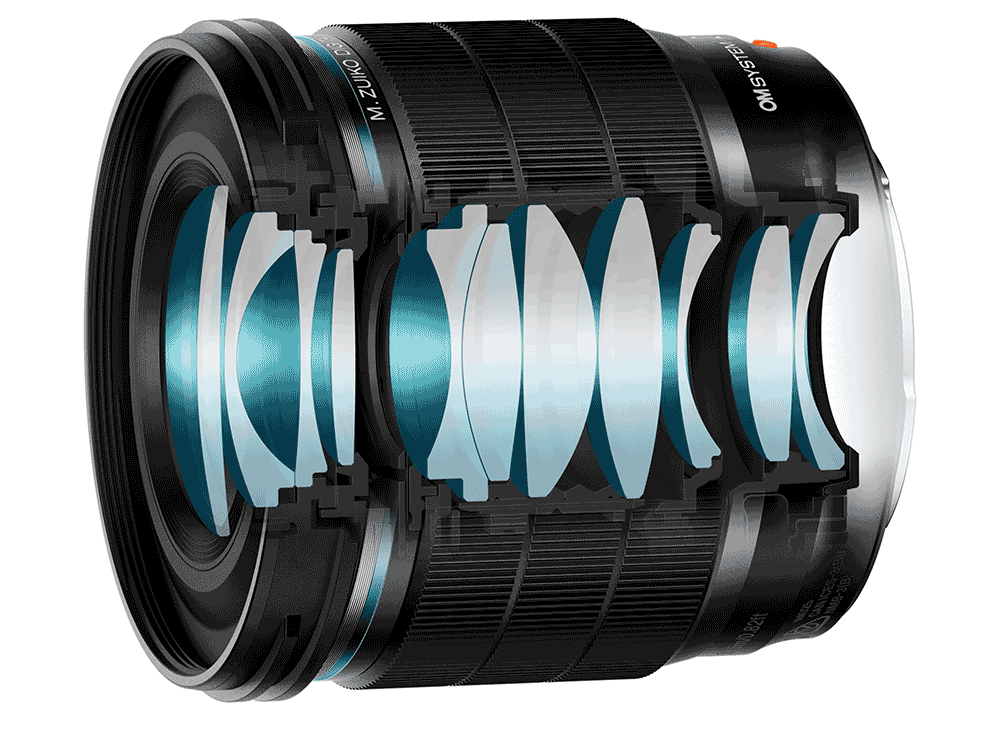
A CCTV camera lens is generally a converging lens, made from one or more convex lens elements that focus light onto the image sensor. However, it may also include concave elements to correct distortion and improve image quality, so the complete lens is not simply convex or concave. The dome cover on some cameras is separate from the lens and does not determine how the camera focuses.
What is the difference between 2.8 and 3.6 CCTV lenses?
A 2.8 mm CCTV lens gives a wider field of view than a 3.6 mm lens, so it can cover more of a room or entrance from the same position. A 3.6 mm lens provides a narrower view, which can make subjects appear slightly larger and may suit monitoring a more specific area. The exact field of view depends on the camera’s image sensor, so check the camera specifications when comparing lenses. Choose 2.8 mm for broader coverage and 3.6 mm when a tighter view is preferred.
What are the different types of lenses in CCTV cameras?
CCTV cameras commonly use fixed, varifocal and motorised zoom lenses. A fixed lens has a set focal length and field of view, making it suitable when the camera’s coverage is already decided. A varifocal lens can be adjusted manually to widen or narrow the view during installation, while a motorised zoom lens allows remote adjustment where supported by the camera system. CCTV lenses may also differ in features such as iris control, which helps manage changing light, and infrared correction for cameras used in day-and-night conditions. The right choice depends on the area to be monitored, the level of detail required and compatibility with the camera.
What is a CCTV lens?
A CCTV lens is the optical component of a surveillance camera that gathers and focuses light onto the image sensor to create a video image. Its focal length determines how wide an area the camera can see and how clearly it captures subjects at different distances. CCTV lenses may have a fixed view or allow adjustment, and should be compatible with the camera’s sensor and mount.
Which is better 2.8 or 4mm CCTV lens?
A 2.8 mm CCTV lens is generally better when you need a wider view to cover a room, entrance or other nearby area, while a 4 mm lens provides a narrower view that can show more detail of subjects farther away. Neither is universally better—the right choice depends on the camera’s sensor, the distance to the area being monitored and how much coverage you need. Check the camera’s field-of-view specifications before choosing.
What lens is used for CCTV?
The lens used for CCTV depends on the camera and the area being monitored. Fixed lenses provide a set field of view, while varifocal lenses can be adjusted during installation to widen or narrow the view. Motorised zoom lenses allow remote adjustment on compatible cameras. When choosing a lens, check its focal length, mount, sensor compatibility, lighting requirements and suitability for the intended surveillance area.