Duct Smoke Detector: How It Works, Where It Is Used and Why It Matters
Heating, ventilation and air-conditioning (HVAC) systems move air throughout a building. If smoke enters an air duct, the system may carry it to other rooms or floors. A duct smoke detector helps identify smoke within the ductwork and can trigger an appropriate response, such as an alarm or a change in HVAC operation.
What Is a Duct Smoke Detector?
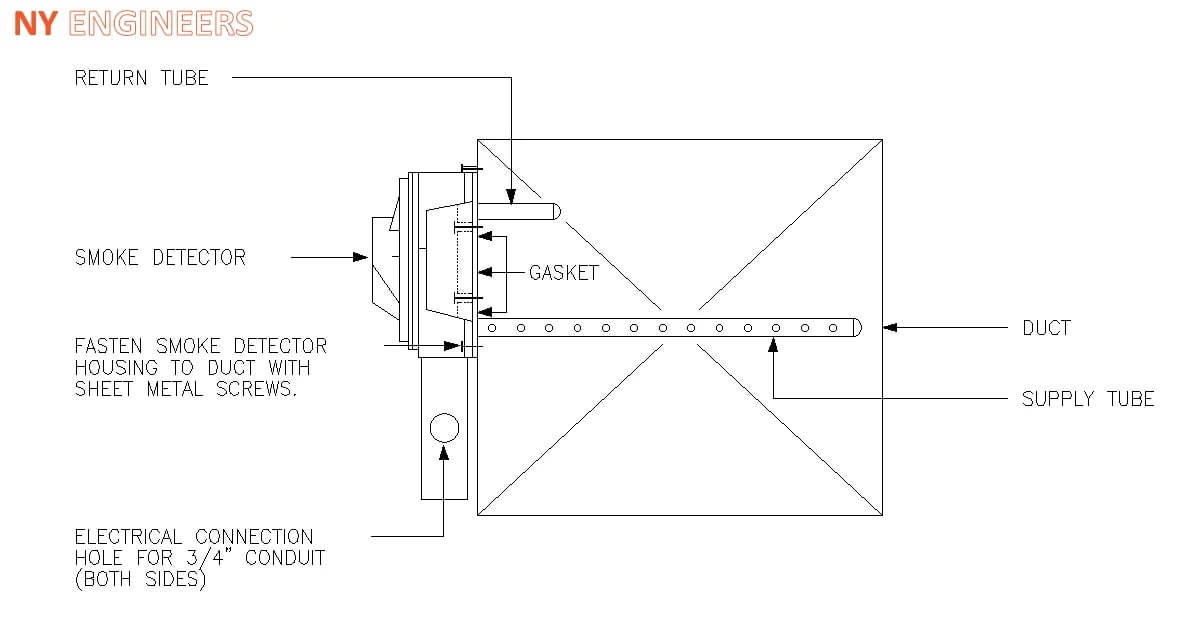
A duct smoke detector is a device designed to sample the air flowing through an HVAC duct and detect smoke particles. It is generally installed on or beside a duct, with sampling tubes extending into the airflow. These tubes draw a sample of air through the detector’s sensing chamber.
When smoke is detected, the unit sends a signal to a fire alarm panel or another connected system. Depending on the building’s fire strategy and system configuration, this signal may also operate equipment such as fans or fire and smoke dampers.
How Does It Work?
- Air sampling: Sampling tubes collect air from the duct as it moves through the HVAC system.
- Smoke detection: The sampled air passes through a sensing chamber, where the detector checks for smoke.
- Signal transmission: If smoke is detected, the unit sends an alarm or supervisory signal to the relevant control system.
- System response: The HVAC equipment may be stopped, adjusted or controlled according to the approved fire and life-safety design.
The exact response depends on the detector, the fire alarm system and the building’s control strategy. Duct smoke detectors do not all perform the same functions, so system design and configuration are important.
Where Are Duct Smoke Detectors Used?
Duct smoke detectors are commonly considered in buildings with centralised or large-scale HVAC systems, including:
- Office buildings and commercial complexes
- Hospitals and healthcare facilities
- Hotels and educational institutions
- Shopping centres and public buildings
- Industrial and institutional premises
The need for a duct detector, and its location, should be determined by the building’s fire strategy, HVAC design and applicable local requirements. Not every duct or ventilation system necessarily requires one.
Why Is Correct Placement Important?
Detector performance depends on factors such as airflow, duct size, the position of the sampling tubes and the presence of filters or bends. A detector installed in a location with unsuitable airflow may not sample air effectively. The manufacturer’s instructions should be followed, and the installation should be planned by suitably qualified fire and HVAC professionals.
Sampling tubes must be correctly positioned and oriented for the direction of airflow. Access should also be available for inspection, testing and maintenance.
Duct Detectors Are Not a Substitute for Room Detectors
A duct smoke detector monitors air inside ductwork. It is not generally intended to provide the same protection as smoke detectors installed in occupied rooms or other areas. It should not be relied upon as a replacement for the building’s required fire detection and alarm devices.
Instead, duct detection forms part of a wider fire safety system that may include smoke and heat detectors, manual call points, alarms, fire and smoke dampers, and HVAC controls.
Installation and Maintenance
Professional installation and regular maintenance help ensure that a duct smoke detector can operate as intended. Maintenance may include:
- Checking the detector, housing, wiring and control connections
- Inspecting sampling tubes for blockage, damage or incorrect positioning
- Testing the detector using the method specified by its manufacturer
- Confirming that the connected alarm and HVAC responses work correctly
- Keeping records of inspections, tests and any corrective work
Dust, construction debris and changes to the HVAC system can affect performance. Testing should follow the manufacturer’s guidance and applicable fire safety requirements.
Choosing a Duct Smoke Detector
Before selecting a detector, consider the HVAC system’s design, duct dimensions, airflow conditions, control requirements and compatibility with the fire alarm panel. It is also important to confirm that the product is suitable for the intended application and can be accessed easily for servicing.
A duct smoke detector can help limit the movement of smoke through an HVAC system when it is correctly selected, installed and integrated. For a safe and dependable solution, consult a qualified fire safety professional and follow the relevant local regulations and manufacturer instructions.
6 Essential Tips for Duct Smoke Detector Installation and Maintenance
- Install it in the HVAC return-air duct as specified by the manufacturer.
- Keep sampling tubes clear of dust and debris.
- Test the detector regularly according to local fire-safety rules.
- Check that airflow and duct conditions suit the detector model.
- Inspect wiring and connections during routine maintenance.
- Arrange servicing by a qualified fire-safety technician.
Install it in the HVAC return-air duct as specified by the manufacturer.
Install the duct smoke detector in the HVAC return-air duct, following the manufacturer’s instructions for its exact location and orientation. Correct placement helps the detector sample airflow effectively and identify smoke moving through the system. Ensure the sampling tubes are suitable for the duct size and airflow, and leave adequate access for inspection, testing and maintenance.
Keep sampling tubes clear of dust and debris.
Keep the duct smoke detector’s sampling tubes clear of dust and debris to help ensure that air can flow through them and reach the sensing chamber effectively. Blockages can reduce the detector’s ability to identify smoke and may lead to unreliable operation. During routine maintenance, inspect the tubes for dust, damage or obstruction, and clean them according to the manufacturer’s instructions.
Test the detector regularly according to local fire-safety rules.
Test duct smoke detectors regularly in line with local fire-safety rules and the manufacturer’s instructions. Routine testing helps confirm that the detector, its connections and any linked alarm or HVAC responses are working correctly. Keep a record of each test, and arrange prompt inspection or repair if a fault is found.
Check that airflow and duct conditions suit the detector model.
Check that the duct’s airflow, dimensions and operating conditions are suitable for the selected detector model. Factors such as air velocity, duct size, filters and nearby bends can affect how effectively the detector samples air. Follow the manufacturer’s installation guidelines and consult a qualified fire safety professional to confirm the detector is positioned and configured correctly.
Inspect wiring and connections during routine maintenance.
Inspect the wiring and connections of your duct smoke detector during routine maintenance. Look for loose terminals, damaged insulation, corrosion or signs of overheating, as these issues can affect communication with the fire alarm panel or the HVAC system. Any faults should be checked and corrected by a qualified technician, following the manufacturer’s instructions and applicable fire safety requirements.
Arrange servicing by a qualified fire-safety technician.
Arrange regular servicing of your duct smoke detector by a qualified fire-safety technician. They can inspect and test the detector, check that sampling tubes are clear and correctly positioned, and confirm that alarms and connected HVAC controls respond as intended. Follow the manufacturer’s maintenance instructions and keep a record of all servicing.