FACP Panel: The Heart of a Fire Alarm System
A Fire Alarm Control Panel (FACP) is the central unit of a fire detection and alarm system. It receives signals from devices such as smoke detectors, heat detectors and manual call points, processes them, and activates appropriate alarms or other programmed responses. By bringing information from across a building to one location, the FACP helps occupants and facility teams respond quickly when a potential fire is detected.
What Does an FACP Do?
The FACP continuously monitors connected devices and circuits. When a detector senses smoke or heat, or someone operates a manual call point, the panel identifies the signal and indicates the relevant alarm condition. Depending on the system design, it may also:
- Activate sounders, bells, strobes or voice evacuation messages
- Display the alarm zone or the address of the device in alarm
- Send signals to a remote monitoring station or building management system
- Operate selected interfaces, such as releasing door holders or controlling smoke-management equipment
- Monitor faults, power supply problems and disconnected devices
These actions depend on the system’s approved design and configuration. Fire alarm panels do not replace a building’s evacuation plan or fire-safety procedures.
Main Components of an FACP
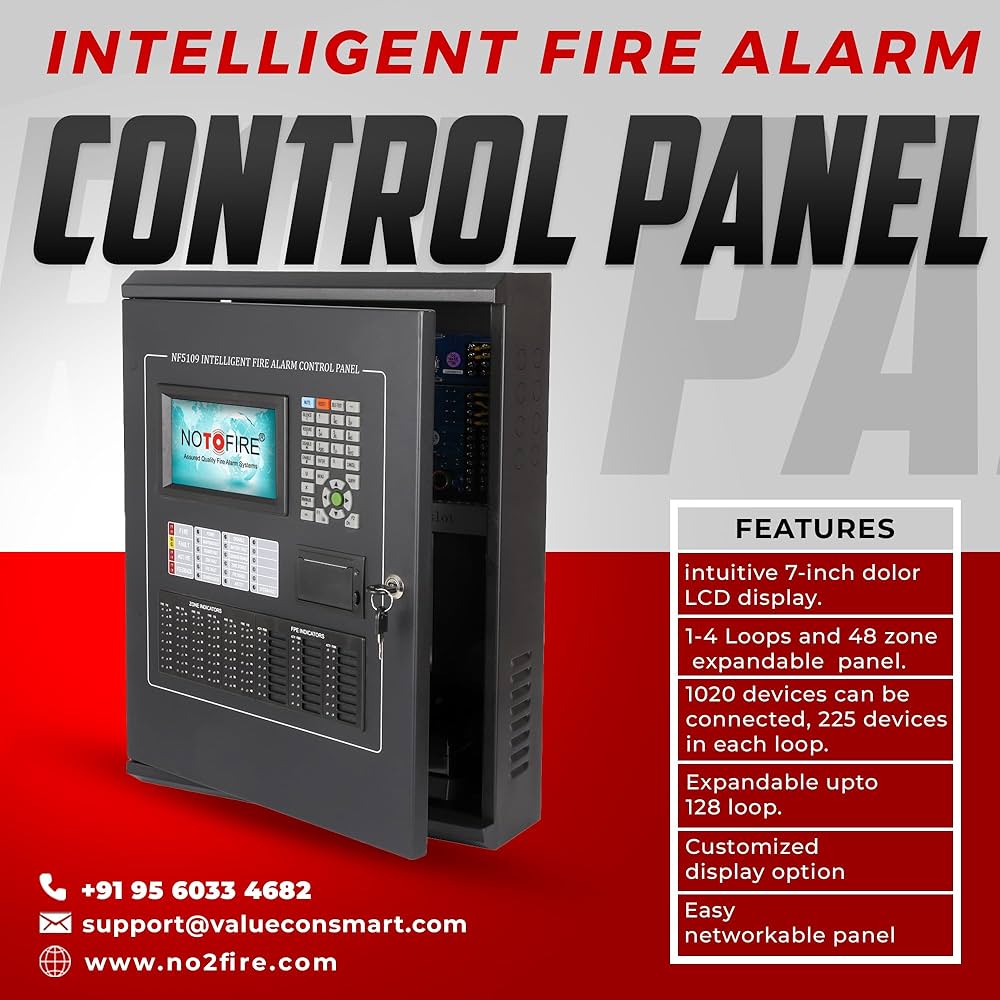
- Control unit: Processes incoming signals and manages the panel’s programmed responses.
- Display and controls: Show alarm, supervisory and fault conditions, and allow authorised personnel to operate or acknowledge the system.
- Detection circuits or loops: Connect the panel to detectors, manual call points and other field devices.
- Notification circuits: Connect sounders, bells, visual alarms or voice alarm equipment.
- Power supply and standby batteries: Provide the required operating power and backup during a mains failure.
- Communication interfaces: Support connections to approved monitoring or building systems, where included in the design.
Conventional and Addressable Panels
Conventional panels divide a building into zones. When an alarm occurs, the panel identifies the zone in which the signal originated, but may not identify the exact device. These systems can suit smaller or simpler installations, subject to the project requirements.
Addressable panels assign a unique address to each compatible device on a loop. This allows the panel to display more precise information, such as the location or identity of the device in alarm. Addressable systems are often considered for larger or more complex sites, where detailed identification can support investigation and response.
The appropriate type depends on factors such as the building layout, risk assessment, number of devices, future expansion needs and applicable requirements.
Why Correct Design and Installation Matter
An FACP is only one part of a complete fire alarm system. Detectors, call points, alarm devices, cabling, power supplies and interfaces must be selected and arranged to suit the building. Poor device placement, incorrect zoning, unsuitable cabling or incomplete programming can affect system performance.
Before installation, the design should consider the building’s use, occupancy, escape routes, environmental conditions and fire-safety strategy. Installation, commissioning and testing should be carried out by competent professionals in accordance with the approved design, manufacturer instructions and applicable Indian requirements, including relevant fire-safety rules and standards such as IS 2189 where applicable.
Testing and Maintenance
Regular inspection and maintenance help keep the system ready for use. A maintenance programme may include checking the panel for alarm and fault indications, testing selected detectors and manual call points, verifying sounders and visual alarms, inspecting batteries and confirming that interfaces operate as intended. The frequency and method should follow the applicable requirements, system documentation and manufacturer guidance.
Any alarm, fault or isolation shown on the panel should be investigated by authorised personnel. Devices or circuits should not be disabled as a routine workaround; if temporary isolation is necessary, it should be controlled, recorded and addressed promptly under the site’s fire-safety procedures.
Choosing an FACP Panel
When evaluating an FACP, consider the number and type of devices required, the size and layout of the site, zone or address-level identification needs, standby power, communication options, integration requirements and provision for future expansion. Compatibility between the panel and connected devices is essential. The system should also be easy for trained staff to understand and operate during an emergency.
Conclusion
The FACP panel is the command centre of a fire alarm system. It monitors connected devices, identifies alarm and fault conditions, and activates programmed notifications. A suitable panel, correctly designed and installed, combined with regular testing and trained personnel, supports effective fire detection and emergency response.
FACP Panels: 5 Frequently Asked Questions About Fire Alarm Control Panels and System Types
- What does FACP mean in fire?
- What is the FACP panel?
- What are the different types of FACP?
- What are L1, L2, L3, and L4 fire alarm systems?
- What does FACP mean in fire protection?
What does FACP mean in fire?
FACP stands for Fire Alarm Control Panel. It is the central unit of a fire alarm system, receiving signals from devices such as smoke and heat detectors and manual call points. When it detects an alarm condition, the panel indicates its location or zone and activates connected alarms or other programmed responses.
What is the FACP panel?
An FACP (Fire Alarm Control Panel) is the central unit of a fire alarm system. It receives signals from devices such as smoke and heat detectors and manual call points, identifies alarm or fault conditions, and activates connected sounders, visual alarms or other programmed responses. Depending on the system, it may also show the zone or specific device that triggered the alert, helping authorised personnel respond promptly.
What are the different types of FACP?
The main types of FACP (Fire Alarm Control Panel) are conventional and addressable. A conventional panel divides a building into zones and indicates the zone where an alarm has occurred, while an addressable panel identifies the specific detector or device sending the signal. Addressable systems may also be analogue-addressable, allowing devices to report changing conditions to the panel. Wireless panels use radio communication with compatible devices, while networked panels link multiple control panels across larger sites. The right type depends on the building’s size, layout, fire-safety requirements and system design.
What are L1, L2, L3, and L4 fire alarm systems?
L1, L2, L3 and L4 are categories of fire detection coverage commonly used in the BS 5839-1 system—not panel models or numbers of circuits. L1 provides automatic detection throughout the building; L2 covers escape routes and specified areas with higher fire risk; L3 covers escape routes and rooms opening directly onto them; and L4 covers escape routes only. The suitable category depends on the building’s design and fire-risk assessment, and these classifications should be applied in line with the relevant local regulations and project requirements in India.
What does FACP mean in fire protection?
FACP stands for Fire Alarm Control Panel. In a fire protection system, it is the central unit that monitors connected devices such as smoke and heat detectors and manual call points. When it receives an alarm signal, the FACP identifies the affected zone or device and activates the programmed alerts, such as sounders or visual alarms. It can also display system faults and, where configured, send signals to other building systems or a monitoring station.