
PoE CCTV Cameras: A Practical Guide to Power over Ethernet Surveillance
PoE CCTV cameras are a popular choice for homes, offices, shops, warehouses and other premises that need reliable video surveillance. PoE stands for Power over Ethernet. It allows a compatible camera to receive power and transmit video and other data through a single Ethernet cable.
By reducing the need for separate power wiring at each camera, a PoE system can make installation neater and easier to manage. Here is how it works, what to consider when choosing a system, and where PoE cameras may be useful.
How does a PoE CCTV camera work?
A PoE camera connects to a network using an Ethernet cable, usually Cat5e or Cat6. A PoE-enabled network video recorder (NVR), PoE switch or injector supplies power through the cable while the camera sends video data back across the network.
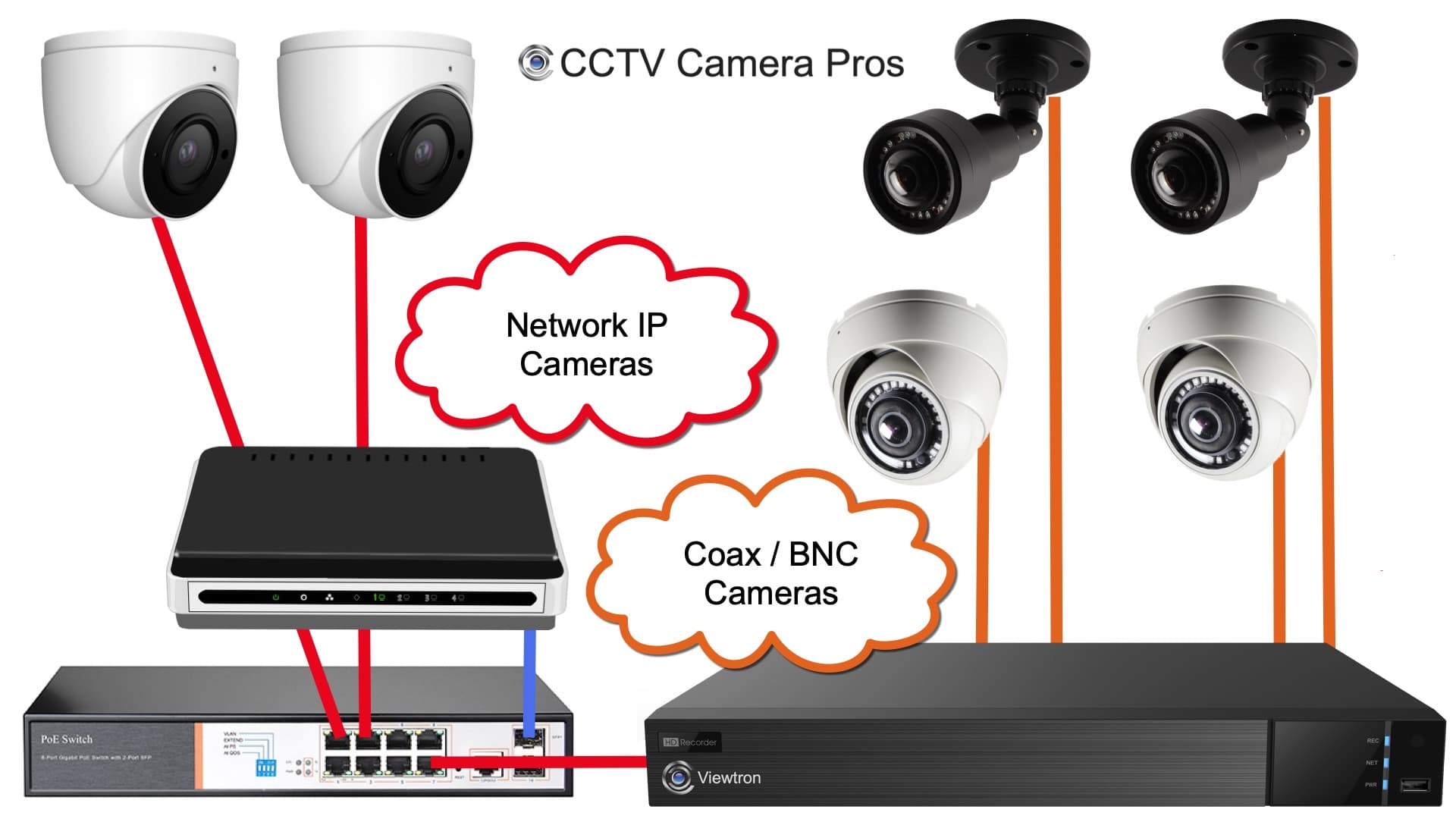
In a typical setup, cameras connect to a PoE NVR or switch, which is linked to a router and a monitor or computer. Footage can be recorded to the NVR’s hard drive, while authorised users may be able to view live or recorded video through compatible software or a mobile app.
Key benefits of PoE CCTV
- One cable for power and data: A single Ethernet cable can reduce wiring and simplify installation.
- Centralised management: Cameras connected to a PoE switch or NVR can be managed from a central location.
- Flexible camera placement: Cameras can be installed where network cabling can be run, without needing a separate mains power point beside every camera.
- Easy system expansion: Additional cameras can often be added by connecting them to available PoE ports, subject to the recorder’s capacity and the network’s power and bandwidth limits.
- Useful recording options: Many PoE systems support continuous, scheduled or motion-based recording, depending on the equipment and configuration.
What to consider when choosing a PoE camera
Resolution and image quality
Choose a resolution suited to the area being monitored and the level of detail required. Higher resolution can provide more detail, but it also uses more storage and network bandwidth. Consider lighting conditions, viewing distance and whether details such as faces or number plates need to be captured.
Indoor or outdoor use
For outdoor installations, check the camera’s weather and dust protection rating, operating temperature range and resistance to tampering. The camera should be suitable for the conditions at the installation location.
Night-time performance
Infrared night vision, low-light sensors and built-in white lights are common features, but their performance varies. Check the expected coverage area and consider whether the camera will face bright lights, reflective surfaces or areas with very little ambient light.
Camera type and coverage
Bullet, dome, turret and PTZ (pan-tilt-zoom) cameras serve different purposes. Fixed cameras monitor a set area, while PTZ models can move and zoom when supported by the system. Select a camera based on the location, field of view and monitoring requirements.
PoE compatibility and power budget
Check that the camera and PoE switch, injector or NVR are compatible. Common PoE standards include IEEE 802.3af and 802.3at, while some devices may require other power arrangements. The PoE equipment must have enough total power capacity to run all connected cameras, including any additional power required by features such as heaters or pan-tilt-zoom motors.
Recording and storage
Estimate how many days of footage need to be retained. Storage requirements depend on the number of cameras, resolution, frame rate, compression, recording schedule and scene activity. Confirm that the NVR supports the cameras and has sufficient drive capacity, or can be expanded as required.
PoE CCTV cable distance
For standard copper Ethernet cabling, a typical network segment supports a maximum length of about 100 metres, including patch leads. Actual performance depends on cable quality, installation conditions and the equipment used. For longer distances, options may include a PoE extender, a suitable intermediate switch or a fibre-based network design. A qualified installer can help choose an appropriate solution.
Planning a PoE CCTV installation
- Identify key areas: List the entrances, reception areas, corridors, parking areas and other locations that need monitoring.
- Plan camera positions: Consider the field of view, mounting height, lighting, obstructions and the privacy of neighbouring areas.
- Choose the recorder and network equipment: Confirm the required number of channels, PoE ports, power budget, storage and remote-viewing options.
- Use suitable cabling: Select good-quality Ethernet cable and protect it from water, heat, interference and physical damage.
- Configure access securely: Change default passwords, use strong credentials, update firmware and restrict system access to authorised users.
- Test the complete system: Check live views, recording, playback, night-time images, notifications and remote access before relying on the system.
PoE CCTV and privacy
CCTV should be installed and operated responsibly. Position cameras to monitor relevant areas and avoid recording private spaces where people have a reasonable expectation of privacy. Limit access to footage, secure stored recordings and follow applicable laws, workplace policies and building requirements in India.
Frequently asked questions
Does a PoE camera need a separate power supply?
Usually not, when it is connected to a compatible PoE switch, injector or NVR. The Ethernet cable carries both power and data. A non-PoE network port cannot normally power a PoE camera on its own.
Can PoE cameras work without internet?
Yes. A PoE camera system can record to a local NVR without an internet connection, provided the local equipment is configured correctly. Internet access is generally needed for viewing the system remotely from outside the local network.
Can PoE cameras be added to an existing CCTV system?
Possibly. Compatibility depends on the camera and recorder specifications, supported video protocols, network configuration and available PoE capacity. Check the equipment documentation before adding cameras.
Choosing the right PoE CCTV solution
A well-planned PoE CCTV system can provide organised cabling, centralised recording and dependable monitoring for a wide range of properties. Before selecting equipment, consider the coverage area, image quality, night-time performance, storage needs, network layout and security requirements. Careful planning and professional installation can help ensure the system meets the needs of the premises.
Top 7 FAQs About PoE CCTV Cameras: Features, Prices, NVRs and Wi-Fi Comparison
- Is PoE better than WiFi?
- What is PoE in a CCTV camera?
- Is PoE CCTV the best?
- What is the price of PoE CCTV?
- What is PoE in CCTV camera?
- What is PoE and NVR?
- What is the difference between CCTV and PoE camera?
Is PoE better than WiFi?
PoE and Wi-Fi suit different CCTV requirements. PoE cameras use an Ethernet cable for both power and data, which generally provides a stable connection and avoids relying on wireless signal strength; however, cabling is needed. Wi-Fi cameras can be easier to install where running cables is difficult, but they still need a power source and may be affected by signal strength, interference or network congestion. For fixed cameras and a more dependable connection, PoE is often a practical choice; for flexible placement or simpler installation, Wi-Fi may be suitable. The best option depends on the site, coverage needs and installation constraints.
What is PoE in a CCTV camera?
PoE in a CCTV camera stands for “Power over Ethernet”. It allows the camera to receive power and transmit video and other data through a single Ethernet cable connected to a compatible PoE switch, injector or NVR. This can reduce the need for separate power wiring at the camera location and help keep the installation neat and straightforward.
Is PoE CCTV the best?
PoE CCTV can be an excellent choice when you want a tidy, reliable system with power and video carried over a single Ethernet cable. It is particularly suitable for homes and businesses where cameras can be connected to a PoE switch or NVR. However, it is not automatically the best option for every site: cable routes, installation costs, network requirements and the availability of power or connectivity should also be considered. The right system depends on the property, coverage needs and budget.
What is the price of PoE CCTV?
The price of a PoE CCTV system in India depends on the number and type of cameras, resolution, night-vision features, recording storage, PoE switch or NVR requirements, cabling and installation. A single camera will cost less than a complete multi-camera setup, so it is best to compare quotations based on the same specifications and warranty. For an accurate estimate, assess the premises and decide how many areas need coverage.
What is PoE in CCTV camera?
PoE in a CCTV camera stands for Power over Ethernet. It allows the camera to receive electrical power and transmit video and data through a single Ethernet cable, instead of needing separate cables for power and network connection. A compatible PoE switch, injector or NVR supplies the power, helping keep installation neater and easier to manage.
What is PoE and NVR?
PoE (Power over Ethernet) is a technology that supplies power and carries data through a single Ethernet cable, allowing compatible CCTV cameras to connect without a separate power cable. An NVR (Network Video Recorder) is a device that receives video from network cameras, records the footage and lets authorised users view or manage it. In a PoE CCTV system, cameras are commonly connected to a PoE-enabled NVR, which can provide power to the cameras and record their footage.
What is the difference between CCTV and PoE camera?
CCTV refers to a video surveillance system, while PoE (Power over Ethernet) describes how a compatible camera receives power and sends data. A PoE camera is typically an IP camera that uses one Ethernet cable to connect to a PoE switch or recorder, carrying both power and video data. Traditional analogue CCTV cameras often use coaxial cable for video and a separate cable for power. In short, PoE is one way of connecting and powering a camera; not every CCTV camera is a PoE camera.