
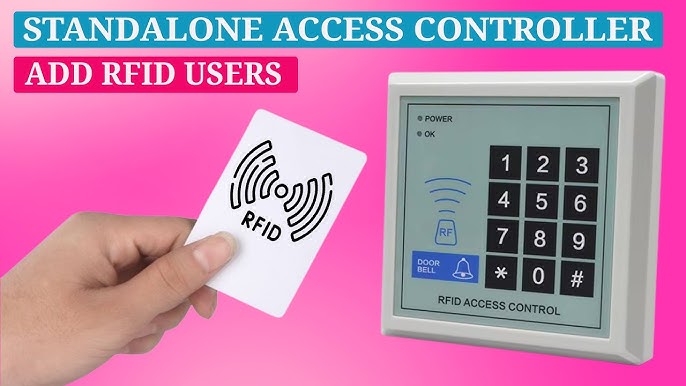
RFID Access Control System: A Smarter Way to Manage Entry
Managing who can enter a building, office or restricted area is an important part of security. An RFID access control system provides a convenient way to verify authorised users and control entry without relying on traditional keys. It is commonly used in offices, residential buildings, factories, educational institutions, hospitals and other premises across India.
What Is an RFID Access Control System?
RFID stands for Radio Frequency Identification. An RFID access control system uses radio waves to identify a credential, such as a card, key fob or tag. When an authorised credential is presented to a reader, the system checks its details against stored permissions. If access is approved, the controller activates the connected door lock or entry mechanism.
Unlike a conventional key, an RFID card can be assigned to a specific user, access point and time period. If a card is lost or a person no longer needs access, its permissions can usually be updated or cancelled in the system.
How Does RFID Access Control Work?
- Present a credential: The user holds an RFID card, fob or tag near the reader.
- Read the credential: The reader captures the credential’s identification data.
- Verify access: The access control panel or connected software checks whether the credential is authorised for that door and time.
- Allow or deny entry: If permission is valid, the system releases the electronic lock. If not, the door remains secured.
- Record the event: Depending on the system, the entry attempt may be logged with details such as the credential and time.
Main Components of an RFID Access Control System
- RFID credentials: Cards, key fobs, wristbands or tags assigned to users.
- RFID reader: The device installed near a door or access point to read credentials.
- Access control panel: The controller that checks permissions and operates the lock.
- Electric lock: A magnetic lock, electric strike or other compatible locking device.
- Access control software: Used to enrol users, set permissions and review system activity.
- Exit device: A push button, sensor or other mechanism that allows people to exit safely.
- Power supply and backup: Provides power to the reader, controller and lock; backup arrangements depend on the installation.
Common Types of RFID Credentials
RFID systems can use different frequencies and credential technologies. The suitable option depends on the required security level, reader compatibility and intended use.
- Proximity cards: Commonly used for everyday access in offices and residential premises.
- Key fobs: Compact credentials that can be attached to a key ring.
- RFID tags: Available in different formats for specific applications, including asset or vehicle identification.
- Smart cards: May support additional functions, such as secure data storage or use with other systems, depending on the card technology.
Not all RFID cards and readers are interchangeable. Before purchasing additional credentials, check that they are compatible with the installed system.
Benefits of RFID Access Control
- Convenient entry: Users can present a card or fob rather than carry and use a separate key.
- Flexible permissions: Access can be assigned by user, door, schedule or role, depending on the system.
- Quick response to lost credentials: A lost card can be deactivated without changing every lock, subject to the system configuration.
- Access records: Many systems can maintain event logs to support security reviews and administration.
- Scalable management: Additional users or access points can often be added as requirements change.
- Integration options: Some systems can be integrated with time and attendance, visitor management, lifts, alarms or other building systems.
Where Are RFID Access Control Systems Used?
RFID access control can be used wherever entry needs to be managed. Common applications include:
- Office entrances, meeting rooms and server rooms
- Apartment buildings, gated communities and shared facilities
- Factories, warehouses and staff-only areas
- Schools, colleges and training centres
- Hospitals, clinics and laboratories
- Hotels, clubs and fitness centres
- Parking areas and vehicle access points, when paired with suitable equipment
What to Consider Before Choosing a System
Every site has different security and operational needs. Before selecting an RFID access control system, consider the following:
- Number of doors and users: Estimate current requirements and allow for future expansion.
- Security requirements: Choose appropriate reader and credential technology for the level of protection needed.
- Access schedules: Confirm whether users need different permissions based on working hours, days or areas.
- Connectivity: Decide whether the system will operate as a standalone installation or connect to a central network.
- Door and lock compatibility: Check the door type, existing hardware and safe exit requirements.
- Power backup: Consider what should happen during a power interruption and select suitable backup arrangements.
- Software and reporting: Review how users will be managed and what access records are required.
- Installation and support: Plan for professional installation, testing, maintenance and user training.
RFID Access Control and Good Security Practices
An RFID system is most effective when it is part of a wider security plan. Keep a record of issued cards, deactivate credentials that are lost or no longer required, and review access permissions periodically. Ensure that doors allow safe emergency exit and that the system is installed and maintained in accordance with applicable requirements. For sensitive areas, an organisation may also consider multi-factor verification, such as combining an RFID card with a PIN or biometric check.
Frequently Asked Questions
Can a lost RFID card be disabled?
In many systems, an administrator can deactivate a lost card and issue a replacement. The exact process depends on the system and how it has been configured.
Can one card work at multiple doors?
Yes, a credential can often be assigned permissions for several doors. Access can also be restricted to selected areas or times, depending on the system.
Does an RFID access control system need an internet connection?
Not necessarily. Some systems operate locally, while others use a network connection for centralised management, remote administration or integration with other software.
Can RFID access control be integrated with attendance software?
Some access control systems can be integrated with time and attendance software. Compatibility should be confirmed before choosing the equipment and software.
Conclusion
An RFID access control system offers a practical way to manage entry, issue individual credentials and organise access permissions. The right solution depends on the site layout, security needs, number of users and required integrations. A careful assessment and professionally planned installation can help create a reliable system that is convenient for users and easier to administer.
RFID Access Control Systems: 8 Frequently Asked Questions About Features, Costs, Working and Benefits
- What is the function of RFID system?
- How much does an RFID cost?
- What is RFID full form?
- What is RFID in access control?
- How does the RFID system work?
- Is RFID a good control system?
- What is RFID access control system?
- What are the benefits of RFID access control?
What is the function of RFID system?
The function of an RFID system is to identify and communicate with tagged objects or credentials using radio waves. In an access control application, an RFID reader detects a card, key fob or tag and sends its information to the controller, which checks whether the user is authorised to enter. If access is approved, the system unlocks the door; it may also record the entry event for security and administration.
How much does an RFID cost?
The cost of an RFID access control system in India depends on factors such as the number of doors, type of RFID reader and cards, electronic locks, controller, software, installation and any required integrations. A basic single-door setup may cost less than a networked system for multiple entry points, while higher-security credentials and advanced features can increase the price. For an accurate estimate, assess your site requirements and request a detailed quotation that includes equipment, installation and ongoing support.
What is RFID full form?
RFID stands for Radio Frequency Identification. It is a technology that uses radio waves to identify and communicate with a tag or card. In an RFID access control system, a reader detects an authorised RFID card or key fob and checks its credentials before allowing entry.
What is RFID in access control?
RFID in access control stands for Radio Frequency Identification. It uses radio waves to identify a credential, such as a card, key fob or tag, when it is presented near a reader. The system checks the credential’s details against the user’s access permissions and, if authorised, signals the door lock to allow entry. Access can be managed by person, door and, depending on the system, time of day.
How does the RFID system work?
An RFID access control system uses radio waves to identify an authorised card, key fob or tag. When the user holds the credential near an RFID reader, the reader captures its unique identification details and sends them to the access control panel. The panel checks whether the credential has permission to enter that door at that time. If access is approved, the system releases the electronic lock; otherwise, the door remains secured. Depending on the system, the entry attempt may also be recorded for later review.
Is RFID a good control system?
Yes, RFID can be a good access control solution for offices, residential buildings and other premises that need convenient, keyless entry. It allows permissions to be assigned to individual cards or fobs, and lost credentials can often be deactivated without replacing the door lock. However, its effectiveness depends on choosing suitable equipment, configuring permissions correctly and following good security practices. For sensitive areas, consider a system that combines RFID with an additional verification method, such as a PIN or biometric check.
What is RFID access control system?
An RFID access control system is an electronic security solution that uses radio frequency identification (RFID) to manage entry to buildings or restricted areas. Users present an RFID card, key fob or tag to a reader, which checks their access permission and unlocks the door if it is authorised. The system can also help administrators manage user access and, depending on its features, keep a record of entry events.
What are the benefits of RFID access control?
RFID access control offers convenient, keyless entry using cards, fobs or tags, while allowing permissions to be assigned by user, location and time. Lost credentials can often be deactivated without replacing door locks, and many systems record entry events to support monitoring and reporting. The system can also be expanded as a site’s needs change and, depending on the equipment, integrated with attendance, visitor management or other building security systems.