Talk-Back System in a Fire Alarm: What It Is and How It Works
During a fire emergency, raising the alarm is only one part of protecting people. Occupants and emergency teams may also need a reliable way to communicate with the building’s control room. A talk-back system supports this two-way communication, helping people report conditions, request assistance and receive instructions.
What is a fire alarm talk-back system?
A talk-back system is a communication facility that allows a person at a designated point in a building to speak with an operator at a central control point, such as a fire command centre or security control room. Depending on the design, communication may be hands-free or use a handset.
Some buildings use the term “talk-back system” for emergency voice communication points. Other systems, including fireman’s telephone systems, are designed primarily to help firefighters communicate with the fire control room. The equipment and operating method can differ, so the system should be selected to suit the building’s fire strategy.
How does it work?
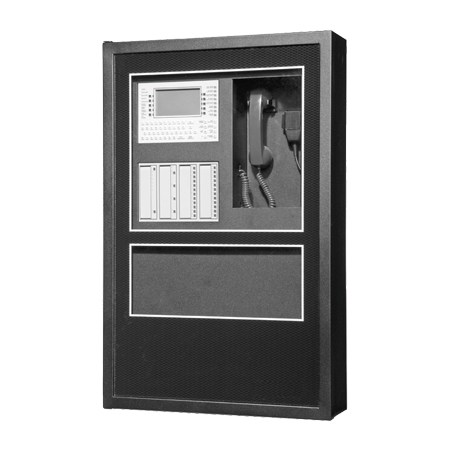
Talk-back points are installed at selected locations, which may include refuge areas, fire command centres, staircases, lift lobbies or other designated emergency locations. When a person activates a point or lifts its handset, the system connects them to an operator or control panel.
The operator can listen to the caller, ask for details and pass on relevant information or instructions. Depending on the system, calls may be made to a central station, selected stations or a group of stations. The exact functions depend on the equipment and how it has been configured.
Key components
- Talk-back points: Wall-mounted or otherwise accessible communication units installed at designated locations.
- Master station or control panel: The equipment used by an operator to answer, manage or initiate calls.
- Communication wiring or network: The connection between field stations and the control point. Its design should suit the building and the system’s required performance.
- Power supply and standby batteries: Power arrangements that help maintain operation during a mains failure, as specified in the system design.
- Status indicators and controls: Features such as call, fault or busy indicators, where provided.
How is it different from a voice evacuation system?
A voice evacuation system broadcasts announcements or pre-recorded messages to occupants, usually through loudspeakers. A talk-back system enables communication in the opposite direction as well: a person at a talk-back point can speak to an operator.
The two systems may be installed alongside one another and may share parts of an emergency communication strategy, but they serve different purposes. A talk-back system does not replace the fire alarm system, detection equipment, alarm sounders or evacuation announcements.
Why is a talk-back system useful?
- It supports emergency reporting: Callers can tell the control room where they are and what assistance they need.
- It helps coordinate response: Operators can gather information from different parts of a building and relay it to responders.
- It provides communication at designated points: This can be valuable where mobile phone coverage is unreliable or where a managed communication facility is required.
- It can assist people who need help: A communication point in a refuge area, for example, may allow someone to inform the control room that they are waiting for assistance.
Where may talk-back points be installed?
Locations should be decided through the building’s fire and life-safety design, rather than by applying a single layout to every site. Depending on the building’s size, occupancy and evacuation strategy, points may be considered in areas such as:
- Refuge areas or other designated waiting points
- Fire command centres and security control rooms
- Firefighting lobbies or other locations used by emergency teams
- Selected staircases, lift lobbies or service areas
Equipment should be clearly identified, accessible and positioned so that it can be used safely during an emergency. The final locations and technical requirements should be confirmed by a qualified fire and life-safety professional in line with applicable Indian regulations, project specifications and relevant standards.
Design, installation and maintenance considerations
A talk-back system is most effective when users can find and operate it quickly. Consider the following during planning and ongoing maintenance:
- Provide clear labels and simple operating instructions at each station.
- Choose equipment suitable for the environment, including areas exposed to dust, moisture or physical damage.
- Plan power backup, wiring routes and fault monitoring as part of the overall system design.
- Check that the control room is staffed or that calls are managed in accordance with the building’s emergency procedures.
- Test communication from each point periodically and record the results.
- Train security staff, facilities teams and other relevant personnel to answer calls and follow escalation procedures.
- Coordinate the talk-back system with the fire alarm, emergency voice communication and evacuation plans where applicable.
Common questions
Is a talk-back system the same as a fireman’s telephone system?
Not always. The terms may be used differently across projects. A fireman’s telephone system generally supports communication for firefighters and authorised personnel, while a talk-back system may also include communication points for occupants or other users. Confirm the intended function when reviewing a specification.
Does a talk-back system automatically call the fire brigade?
Not necessarily. A talk-back point usually connects to a designated control station within the building. Any connection to an external monitoring service or emergency agency depends on the system design and agreed procedures.
Can it operate during a power failure?
That depends on its power-supply and backup arrangement. The design should specify how the system is powered and how long it is expected to operate during a mains failure.
Conclusion
A talk-back system can form an important part of a building’s emergency communication arrangements. By enabling two-way contact between designated locations and a control room, it can help operators understand what is happening and coordinate assistance. Correct design, clear operating procedures, staff training and regular testing are essential to ensure the system is ready when needed.
7 Essential Tips for Fire Alarm Talk-Back Systems
- Install the talk-back system as per local fire safety rules.
- Place call points near fire lifts and refuge areas.
- Keep speakers and microphones clearly labelled and accessible.
- Test two-way communication during regular fire drills.
- Provide backup power for use during a power failure.
- Train staff to speak clearly and share the exact location.
- Arrange regular inspection and maintenance by qualified technicians.
Install the talk-back system as per local fire safety rules.
Install the talk-back system in accordance with applicable local fire safety rules, building regulations and project requirements. Engage a qualified fire safety professional to confirm the correct equipment, locations, wiring and power backup for the building. Ensure the system is properly commissioned, tested and maintained, and that staff know how to use it during an emergency.
Place call points near fire lifts and refuge areas.
Place talk-back call points near fire lifts and designated refuge areas so people can quickly contact the control room during an emergency. Clear signage, easy access and regular testing help ensure the points can be located and used when assistance is needed. The final locations should follow the building’s fire strategy and applicable Indian regulations and standards.
Keep speakers and microphones clearly labelled and accessible.
Keep speakers and microphones clearly labelled and easy to access so occupants and emergency personnel can identify and use them quickly during an incident. Use clear, durable signs, place equipment where it is not blocked by furniture or stored items, and ensure labels remain visible in low-light conditions. Regular checks can help confirm that the equipment is accessible and ready for use.
Test two-way communication during regular fire drills.
Test the talk-back system during regular fire drills to confirm that clear two-way communication is possible from every designated point to the control room. Check that calls can be answered promptly, messages are easy to hear and understand, and staff know how to respond and escalate requests for assistance. Record any faults and arrange repairs without delay.
Provide backup power for use during a power failure.
A talk-back system in a fire alarm should have a reliable backup power supply so communication remains available if the mains power fails during an emergency. The backup may use batteries or another suitable source, selected and sized according to the system design and applicable requirements. Include the power supply in routine inspections and testing, and replace batteries when necessary to help ensure the system is ready for use.
Train staff to speak clearly and share the exact location.
Train staff to speak clearly and state their exact location when using a fire alarm talk-back system. In an emergency, calm, concise information—such as the floor, room number, nearest stairwell or refuge area—helps the control room understand the situation and direct assistance quickly. Regular practice can help staff communicate confidently, even under pressure.
Arrange regular inspection and maintenance by qualified technicians.
Arrange regular inspection and maintenance of the fire alarm talk-back system through qualified technicians. Routine checks can help identify faulty handsets, damaged wiring, power-supply issues or communication failures before an emergency occurs. Keep a record of inspections, repairs and test results, and ensure any faults are rectified promptly so the system remains reliable and ready for use.