
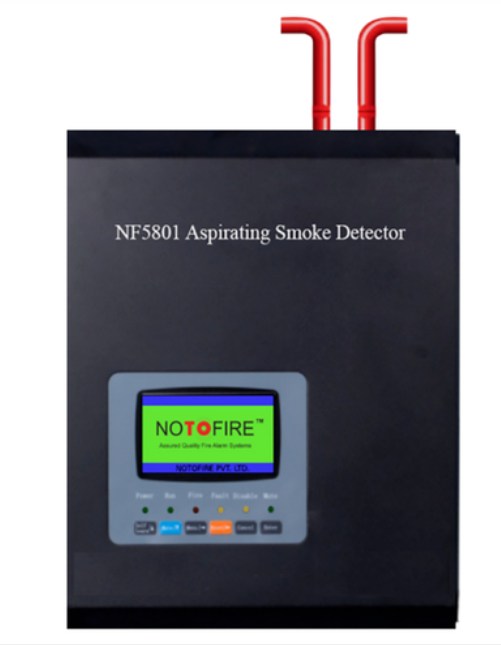
Aspirating Smoke Detector: Early Warning for Critical Environments
Fire can develop quickly, and in some buildings even a short delay in detection can put people, property and essential operations at risk. An aspirating smoke detector (ASD) is designed to detect smoke at a very early stage by actively drawing air samples from a protected area and analysing them for smoke particles.
Unlike a conventional point smoke detector, which waits for smoke to reach the device, an ASD samples air through a network of pipes. This makes it a useful option for locations where early warning is important or where smoke may be difficult to detect using standard devices.
How does an aspirating smoke detector work?
An ASD system uses a fan or aspirator to draw air through small sampling holes in a pipe network. The sampled air travels to a detection unit, where it is examined for smoke particles. If smoke is detected, the system can activate alarms or send a signal to a fire alarm control panel, depending on how it has been designed and configured.
The pipe network can be installed above ceilings, below raised floors or within other concealed spaces. Sampling points are positioned to draw air from the areas requiring protection. Some systems also monitor airflow to help identify issues such as a blocked or damaged pipe.
Key components of an ASD system
- Sampling pipework: A network of pipes that carries air samples from the protected area to the detector.
- Sampling holes: Carefully planned openings in the pipe through which air is drawn.
- Aspirator: A fan or pumping mechanism that pulls air through the pipe network.
- Smoke detection unit: The part of the system that analyses the air sample for smoke particles.
- Alarm and monitoring interfaces: Connections that communicate alerts to a fire alarm panel or other monitoring system.
Benefits of aspirating smoke detection
- Very early warning: Depending on the system design and conditions, an ASD may identify smoke at an early stage, giving occupants and response teams more time to act.
- Flexible sampling locations: Pipes can reach concealed, high or difficult-to-access spaces where installing or servicing point detectors may be challenging.
- Centralised detection equipment: The detector unit can be positioned in an accessible location, while sampling pipes protect the required areas.
- Suitable for sensitive environments: Early detection can be valuable where smoke could threaten equipment, stock or continuity of operations.
- Design flexibility: Pipe layouts and sampling points can be planned to suit different room shapes and operational requirements.
Where are aspirating smoke detectors used?
ASD systems are often considered for environments where early smoke detection is particularly important, or where building conditions make conventional detection less suitable. Applications may include:
- Data centres and server rooms
- Telecommunications facilities
- Clean rooms and laboratories
- Warehouses and high-ceiling spaces
- Electrical and control rooms
- Cold storage facilities
- Museums, archives and document storage areas
- Areas with restricted access or concealed spaces
The suitability of an ASD depends on factors such as the building layout, airflow, environmental conditions, fire strategy and applicable local requirements. A system should be selected and designed for the specific site rather than based on a general application list.
ASD and conventional smoke detectors: what is the difference?
A conventional point detector senses smoke in the air immediately around the detector. An aspirating system actively draws samples from multiple points through a pipe network and analyses them at a detection unit. This approach can be useful in spaces where smoke movement is affected by ventilation, where ceilings are very high, or where access to the protected area is limited.
Neither type is automatically the right choice for every building. A fire safety professional can assess the site and determine whether an ASD, point detection, or a combination of technologies is appropriate.
Installation and maintenance considerations
Good design is essential to the performance of an aspirating smoke detection system. Pipe routes, sampling-hole positions, airflow, detector sensitivity and environmental conditions should all be considered during planning. Incorrectly placed sampling points or unsuitable pipe layouts may affect how effectively the system monitors an area.
Regular inspection and maintenance are also important. Checks may include verifying the detector’s operation, reviewing airflow readings, inspecting pipework and sampling holes, and testing alarm connections. Maintenance should follow the manufacturer’s instructions, the system design and applicable fire safety requirements. Any changes to room use, ventilation or building layout should be reviewed, as they may affect system performance.
Choosing the right aspirating smoke detection system
When evaluating an ASD solution, consider the level of protection required, the size and layout of the space, air movement, environmental conditions, access for maintenance and integration with the existing fire alarm system. The design should be carried out by qualified professionals and aligned with relevant Indian standards, fire safety regulations and local authority requirements.
Conclusion
An aspirating smoke detector provides an active method of sampling air and can offer early warning in locations where fire detection is especially critical or challenging. With appropriate design, installation, commissioning and maintenance, an ASD system can form an important part of a broader fire detection and life safety strategy.
Aspirating Smoke Detectors: 7 Frequently Asked Questions
- What is an aspirating smoke detector and how does it work?
- How is an aspirating smoke detector different from a conventional smoke detector?
- Where are aspirating smoke detectors commonly used?
- What are the main benefits of an aspirating smoke detection system?
- How are sampling pipes and sampling holes designed and installed?
- How often should an aspirating smoke detector be inspected and maintained?
- What factors should be considered when choosing an aspirating smoke detector?
What is an aspirating smoke detector and how does it work?
An aspirating smoke detector (ASD) is a fire detection system that actively samples air to identify smoke, often at an early stage. A fan draws air through a network of pipes with sampling holes placed around the protected area. The air is then carried to a detection unit, where it is analysed for smoke particles. If smoke is detected, the system can trigger an alarm or send a signal to the fire alarm control panel. Because sampling points can be installed in concealed, high or hard-to-reach spaces, an ASD can be useful in environments such as data centres, warehouses and electrical rooms.
How is an aspirating smoke detector different from a conventional smoke detector?
An aspirating smoke detector actively draws air through a network of pipes and sampling holes to a central unit, where the air is analysed for smoke particles. A conventional smoke detector, by contrast, senses smoke in the air immediately around the detector. This makes aspirating systems useful for large, high-ceiling or hard-to-access areas where early warning is important, while conventional detectors are commonly used to protect individual rooms and standard spaces. The right option depends on the building, its fire safety requirements and the system design.
Where are aspirating smoke detectors commonly used?
Aspirating smoke detectors are commonly used in areas where very early smoke detection is important or where conventional detectors may be difficult to install or maintain. Typical applications include data centres, server and telecommunications rooms, clean rooms, laboratories, warehouses, high-ceiling spaces, electrical control rooms, cold storage facilities, and museums or archives. The right choice depends on the building’s layout, airflow, environmental conditions and fire safety requirements.
What are the main benefits of an aspirating smoke detection system?
An aspirating smoke detection system actively draws air samples through a network of pipes and analyses them for smoke, which can provide very early warning of a potential fire. Its flexible pipe layout can protect large, high-ceiling, concealed or difficult-to-access spaces, while the detector unit can be placed in an accessible location for inspection and maintenance. These systems are especially useful in areas such as data centres, warehouses, clean rooms and archives, where early detection can help protect people, equipment and business operations. Performance depends on suitable design, installation and regular maintenance.
How are sampling pipes and sampling holes designed and installed?
Sampling pipes and holes are designed according to the protected area’s layout, ceiling height, airflow, environmental conditions and the detector manufacturer’s specifications. A qualified fire protection professional calculates the pipe network and positions sampling holes to provide suitable coverage while maintaining the required airflow and sensitivity. Pipes are securely installed, kept clear of obstructions and labelled where needed; holes must be correctly sized, oriented and free from dust or debris. After installation, the system should be commissioned and tested to confirm airflow, detection performance and alarm connections, with the layout documented for future inspection and maintenance.
How often should an aspirating smoke detector be inspected and maintained?
An aspirating smoke detector should be inspected and maintained at intervals specified by the manufacturer, the system design and applicable Indian fire safety requirements. Regular checks typically include testing the detector and alarm connections, reviewing airflow readings, and inspecting the sampling pipework and holes for dust, blockages or damage. The frequency may vary depending on the environment, as dusty or otherwise demanding conditions can require more frequent attention. Maintenance should be carried out by qualified personnel, and any changes to the building layout or ventilation should prompt a review of the system.
What factors should be considered when choosing an aspirating smoke detector?
When choosing an aspirating smoke detector, consider the size and layout of the area, ceiling height, ventilation and airflow, ambient temperature, dust or other airborne contaminants, and the level of detection sensitivity required. The pipe network and sampling-hole positions should suit the space and be designed to provide reliable air sampling. Also check compatibility with the existing fire alarm and building management systems, compliance with applicable Indian standards and local fire safety requirements, and the availability of installation, testing and maintenance support. A qualified fire safety professional can assess these factors and recommend a system suited to the site.