
Smoke Alarm System: An Essential Part of Fire Safety
A smoke alarm system helps detect smoke at an early stage and alert people to a possible fire. Early warning can give occupants valuable time to evacuate and contact emergency services. Smoke alarms are an important safety measure in homes, offices, shops, hotels, schools and other buildings.
How Does a Smoke Alarm Work?
A smoke alarm senses particles in the air produced by smoke. When smoke reaches the sensor, the device activates an audible alarm. Depending on the system, it may also trigger visual indicators or send a signal to a central fire alarm panel, security control room or monitoring service.
A smoke alarm is designed to provide an early warning. It does not extinguish a fire, so it should be used alongside an evacuation plan, suitable firefighting equipment and other required fire safety measures.
Common Types of Smoke Detectors
- Photoelectric detectors: These detect smoke using a light source and sensor. They are often responsive to slow, smouldering fires.
- Ionisation detectors: These use an ionisation chamber to detect smoke particles and may respond quickly to some fast-flaming fires. Their availability and use may be subject to local requirements.
- Multi-sensor detectors: These combine smoke detection with other sensing technologies, such as heat detection, to help improve detection and reduce unwanted alarms.
- Addressable detectors: Commonly used in larger buildings, these identify the specific detector or location sending an alarm signal through the fire alarm panel.
- Conventional detectors: These report an alarm by zone, which can be suitable for some smaller or simpler installations.
Key Components of a Smoke Alarm System
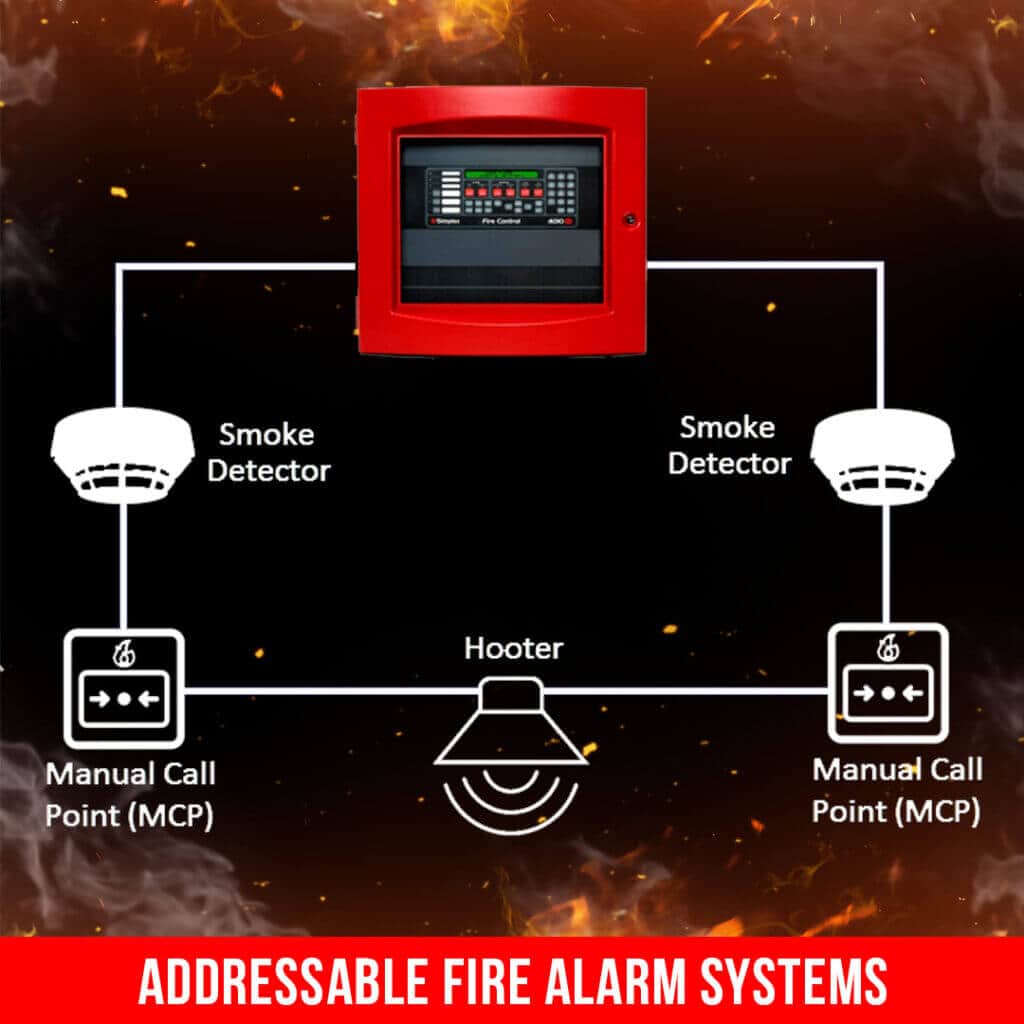
A basic smoke alarm may be a standalone battery-operated or mains-powered unit. A larger fire detection system can include:
- Smoke detectors and, where appropriate, heat detectors
- A fire alarm control panel
- Manual call points for raising an alarm
- Sounders, bells and visual alarm devices
- Backup power supplies
- Communication links to monitoring or building management systems, where required
Where Should Smoke Alarms Be Installed?
Placement depends on the building layout, its use and applicable fire safety requirements. In general, detectors may be needed in circulation areas and other locations identified by a competent fire safety professional. Their position should allow smoke to reach the sensor while avoiding unsuitable locations, such as areas where dust, steam or cooking fumes could cause nuisance alarms.
Do not install, relocate or disable detectors without checking the manufacturer’s instructions and relevant local requirements. For commercial and multi-storey buildings, a qualified fire safety professional should assess the premises and design the system accordingly.
Installation, Testing and Maintenance
Correct installation is essential for reliable operation. Follow the product instructions and have fixed systems installed and commissioned by competent personnel. Regular inspection and testing should be carried out in line with the manufacturer’s guidance, the system design and applicable regulations.
- Test alarms at the recommended intervals using the test function.
- Keep detectors clean and free from dust, paint and obstructions.
- Check batteries and backup power supplies as instructed.
- Arrange prompt investigation of faults, warning indicators and repeated unwanted alarms.
- Maintain service records and ensure occupants know what to do when an alarm sounds.
Choosing a Smoke Alarm System
When selecting a system, consider the size and use of the premises, the number of floors and rooms, the need for central monitoring, and how alarms will be heard or seen by occupants. Also check product compatibility, power supply, backup arrangements, maintenance needs and compliance with relevant Indian fire safety rules and standards.
Conclusion
A properly selected, installed and maintained smoke alarm system can provide an important early warning of fire. It should form part of a broader fire safety plan that includes clear evacuation routes, regular staff or resident awareness, and suitable emergency procedures. Consult a qualified fire safety professional to determine the right solution for your premises.
8 Essential Smoke Alarm Installation and Safety Tips
- Install smoke alarms on every floor.
- Place alarms inside and outside bedrooms.
- Mount alarms on the ceiling or high on a wall.
- Interconnect alarms so they all sound together.
- Test alarms once a month.
- Replace batteries as recommended by the manufacturer.
- Replace the alarm unit every 10 years.
- Never disable an alarm while cooking.
Install smoke alarms on every floor.
Install smoke alarms on every floor of your home or building to help provide early warning wherever a fire may start. Place them in suitable locations, such as corridors near sleeping areas, and follow the manufacturer’s instructions and applicable fire safety requirements. Test the alarms regularly and keep them clean and working properly.
Place alarms inside and outside bedrooms.
Place smoke alarms inside bedrooms and in the areas just outside them to help alert occupants to smoke, whether a fire starts in a bedroom or elsewhere in the home. In multi-storey buildings, install alarms on every level, following the manufacturer’s instructions and applicable fire safety requirements. Ensure alarms can be heard when doors are closed, and test them regularly.
Mount alarms on the ceiling or high on a wall.
Smoke rises, so mount smoke alarms on the ceiling or high on a wall to help detect it promptly. Follow the manufacturer’s instructions for the correct position and keep alarms away from corners, vents and areas where cooking fumes or steam could cause nuisance alerts.
Interconnect alarms so they all sound together.
Interconnect your smoke alarms so that when one detects smoke, every alarm in the building sounds together. This helps alert people throughout the premises, including those in rooms far from the fire or on another floor. Choose compatible alarms and have them installed according to the manufacturer’s instructions and applicable fire safety requirements. Test the interconnected system regularly to make sure every alarm responds correctly.
Test alarms once a month.
Test your smoke alarms once a month to check that they are working properly. Use the test button and make sure the alarm sounds clearly. If it does not, check the batteries and follow the manufacturer’s instructions; replace the unit if it still fails. Regular testing helps identify problems early, but it does not replace routine cleaning and maintenance.
Replace batteries as recommended by the manufacturer.
Replace the batteries in your smoke alarm as recommended by the manufacturer to help ensure it remains ready to detect smoke. Use the specified battery type, check that it is fitted correctly, and test the alarm after replacement. If the alarm continues to beep or show a fault, refer to the user manual or contact a qualified professional.
Replace the alarm unit every 10 years.
Replace your smoke alarm unit every 10 years, or sooner if the manufacturer recommends it. Sensors can become less reliable over time, even when the alarm appears to be working. Check the manufacture or replacement date on the unit, and install a new alarm promptly when it reaches the end of its service life. Always follow the manufacturer’s instructions and test the new alarm after installation.
Never disable an alarm while cooking.
Never disable a smoke alarm while cooking, even if it sounds because of steam or cooking fumes. Turning it off can leave everyone without an early warning if a fire starts. Instead, improve ventilation by using an extractor fan or opening a window, and move cooking appliances away from the detector if appropriate. If nuisance alarms happen often, ask a qualified professional to check the alarm’s location and suitability—never remove its battery or disconnect it.